Ani Ma’amin (“I Believe”)


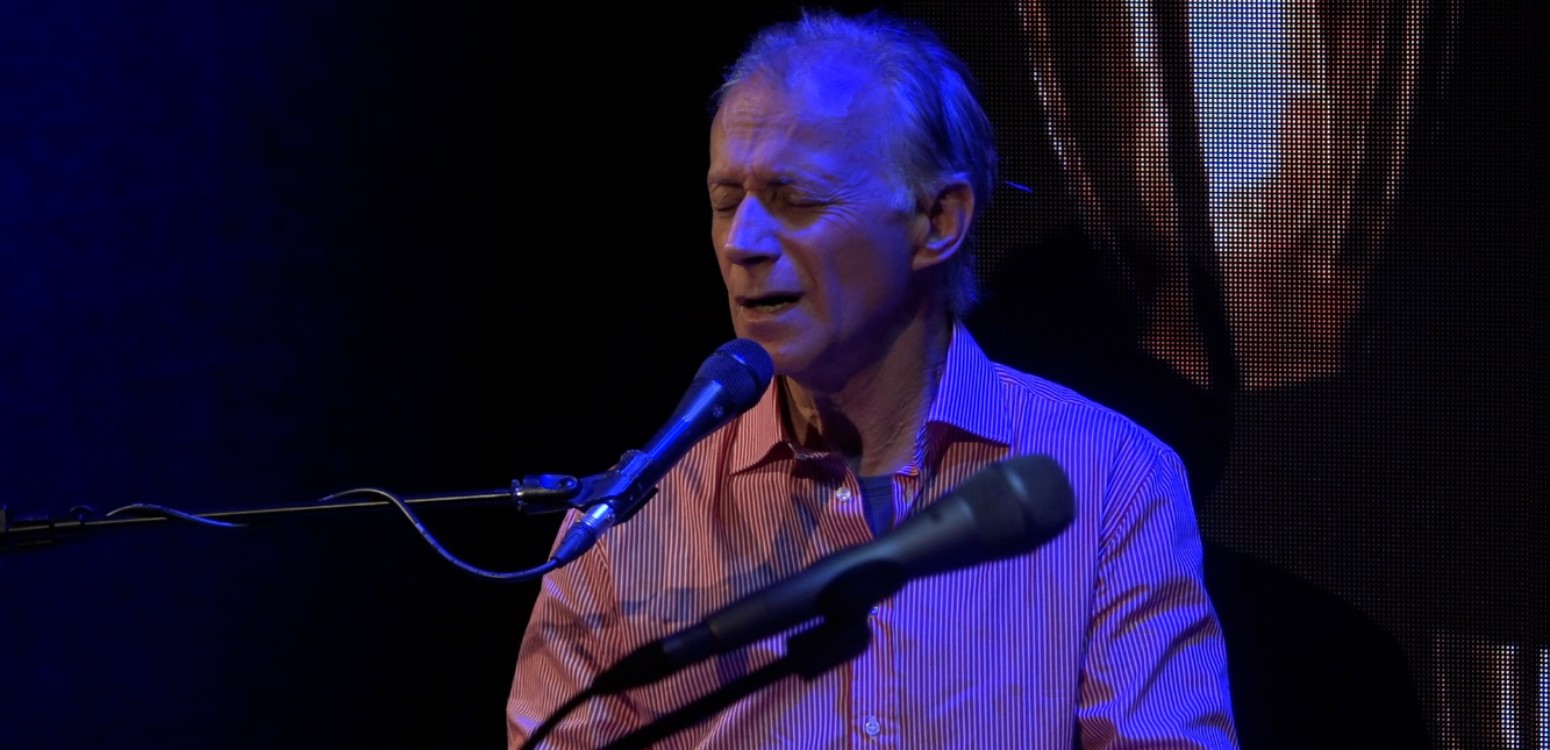
Last year, when Prof. Avner Holtzman concluded his lecture series at Beit Avi Chai about Hayim Nahman Bialik (1873–1934), Israel’s national poet, some listeners wrote to him asking for a similar series about Shaul Tchernichovsky’s poetry. It took a while, but Holtzman, Professor Emeritus of Hebrew Literature at Tel Aviv University and the head of the Humanities Division at the Israel Academy of Sciences and Humanities, obliged.
He too thinks that a series dedicated to Tchernichovsky (1875–1943) was the obvious next step. “The comparison between them has been done to death; it’s so hackneyed,” he says. “But it is unavoidable and warranted.”
Bialik and Tchernichovsky, who were contemporaries, published their first poems in the same year and simultaneously became the most emblematic voices of 1890s Hebrew poetry. They stood out as young modernizers emerging from the so-called Hibbat Zion poetic circles, a generation of proto-nationalist poets whose work was marked by structural rigidity and sentimentalism.
Whereas Bialik’s imagery, reflecting his biography, was deeply embedded in Jewish tradition, Tchernichovsky didn’t decide until relatively late whether he was going to be a Hebrew or a Russian poet. Born into a Russian-speaking middle-class family in a provincial town in southern Ukraine, he never studied in a cheder or a yeshiva. Young Shaul was given a comprehensive classical education by his parents before being sent to a gymnasium in Odessa. There he became friends with Joseph Klausner (1874–1958), later a prominent literary editor and scholar, who introduced him to the city’s buzzing intellectual Jewish circles. “Klausner claimed that it was thanks to him that Tchernichovsky became a Hebrew poet,” says Holtzman.
An ambassador of the Western canon in Hebrew poetry
Tchernichovsky was a self-appointed ambassador of the Western canon in Hebrew poetry. His oeuvre incorporates many themes from classical and modern European literature, particularly evident in its recurring pagan and sacrilegious motifs. One of his signature poems, “Before the Statue of Apollo” (לְנֹכַח פֶּסֶל אַפּוֹלוֹ), illustrates this in both content and form. Written in the first person, the poem depicts him taking a bow before a statue of the Greek god of music and calls for the wrapping of its beauty in tefillin. These blatantly transgressive acts for a Jew – in all likelihood a deliberate provocation – are conveyed through ekphrasis, a Greek rhetorical device involving the vivid description of a work of art, explains Holtzman.
Tchernichovsky was not content with merely exposing Hebrew readers to the Greek canon through his poems. He was no less important as a translator than as a poet, providing Hebrew with some of its earliest translations of great works of literature. “Tchernichovsky wasn’t just the greatest poet, he was the greatest translator, too,” Holtzman says. He was proficient in ten languages and translated from 16 in total, sometimes via an intermediary language. “He was particularly taken by epic poems – Finnish, Serbian, American, Russian – and of course, the crown jewel, the Homeric epics that he was the first to translate into Hebrew in full.”
“The most intricately developed genre in Tchernichovsky’s poetry was the idyll –drawn-out poems depicting people engaging in mundane activities, often against a pastoral backdrop,” Holtzman says. “Poet Jacob Fichman, Tchernichovsky’s contemporary, said that the idyll was ‘the sweetest fruit’ in Tchernichovsky’s basket.” He was heavily influenced by Ancient Greek and modern German idylls; but whereas Theocritus and Goethe focused on pagan and bourgeois scenes, respectively, Tchernichovsky kept his idylls in a thoroughly Jewish context.
“The idyll was a genre that lent itself especially to Tchernichovsky’s fascination with aesthetics,” Holtzman says. One of his idylls depicts a woman frying latkes; another, “Elkah’s Wedding” (חֲתֻנָּתָהּ שֶׁל אֶלְקָה), describes an outdoor Jewish wedding in great detail. “Like the Heat of the Day” (כחום היום), perhaps his most famous idyll, inspired more than two dozen scholarly articles, as well as many tributes, including by Nathan Zach (1930–2020), the great modernist poet, as late as the 1970s.
Bialik and Tchernichovsky in Eretz Israel
Tchernichovsky made aliya in 1931, at the age of 56, and settled in Tel Aviv. He arrived seven years after Bialik, and their lives in Eretz Israel further highlighted the differences between them. Whereas Bialik lived in relative affluence, Tchernichovsky struggled to make ends meet. Despite being a medical doctor, he could find only part-time work with the Tel Aviv municipal school board. But while Bialik’s aliya marked the twilight of his poetic career – he published no more than 10 poems between his arrival in Tel Aviv and his death – it ushered in an exceptionally fruitful period for Tchernichovsky. This was despite his age and the challenge of adapting the rhythms of his poetry from Ashkenazi pronunciation to the very different Eretz Israeli pronunciation. He also began experimenting with new forms of writing, including political poetry. Holtzman attributes this shift partly to Bialik’s death, which freed Tchernichovsky from the shadow of his illustrious contemporary.
A cosmopolitan outsider
Tchernichovsky’s brazen nonconformity is one of the reasons his poetry is largely overlooked today, says Holtzman. “While both Bialik and Tchernichovsky were considered equals in their lifetime, the former was very much in tune with the Jewish sentiment and the latter a cosmopolitan through and through,” he says. “His rebellious nature was frowned upon during his lifetime. For example, Ahad Haam disparaged his erotic poems as pornography and refused to publish them in his influential journal HaShiloah. But he could get away with it time and again because of his immense talent.” Still, he remained an outsider. "Yosef Haim Brenner said that Tchernichovsky was a great poet, but unlike Bialik he was not ‘our poet.’”
More than 80 years after his death, Tchernichovsky’s outsider status is more perceptible than ever.
For more, see Prof. Avner Holtzman’s online series at BAC on Tchernichovsky’s Poetry (in Hebrew).
Main Photo: Hayyim Nahman Bialik and Shaul Tchernichovsky\ Wikipedia