Ani Ma’amin (“I Believe”)


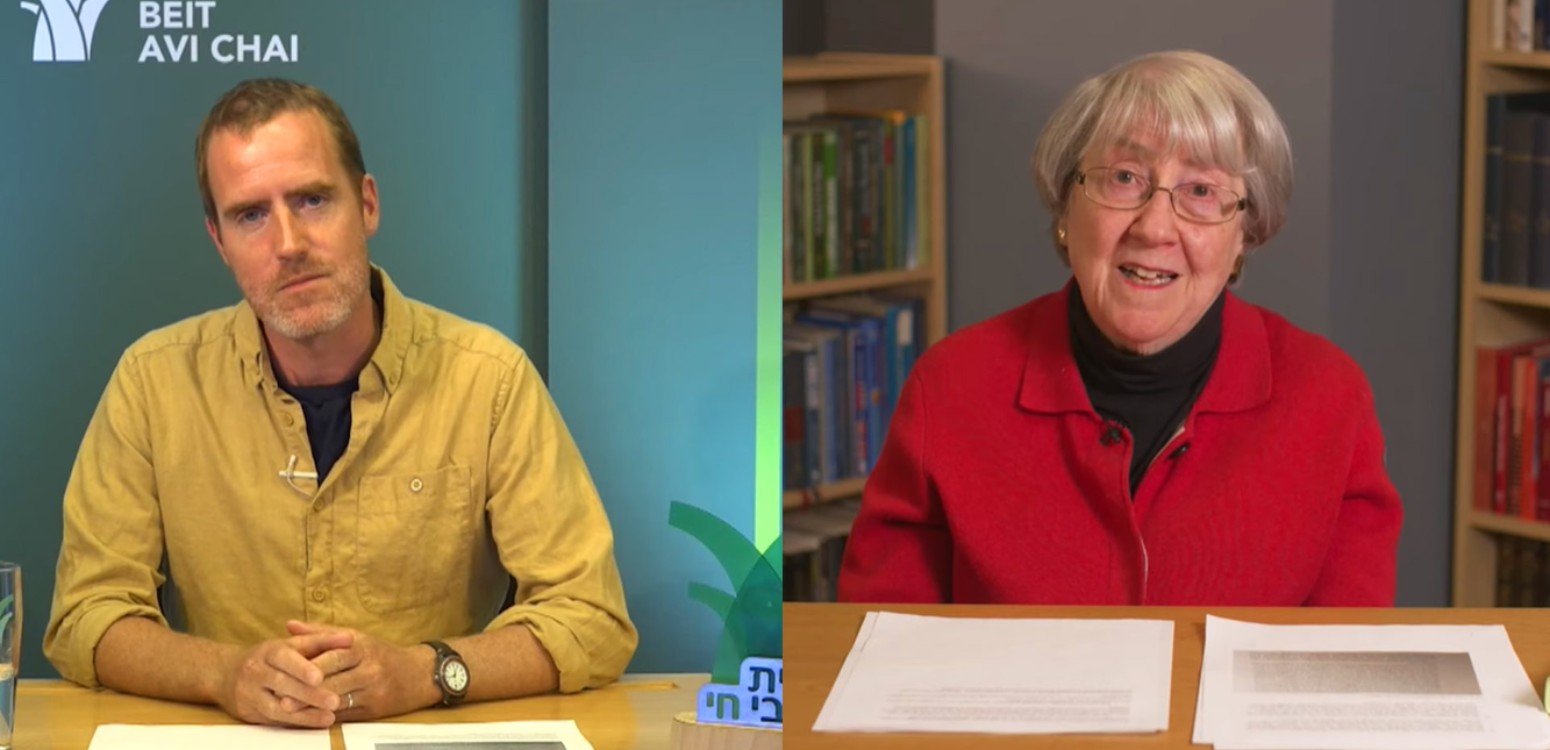
When Hayim Nahman Bialik (1873-1934), the father of modern Hebrew poetry, positioned himself al saf beit hamidrash (“on the threshold of the house of study”), he wasn’t simply choosing a physical location. Instead, he was claiming a space neither fully inside the world of traditional Jewish learning nor fully removed from it. For Professor Avner Holtzman, editor of the definitive edition of the poet’s works and author of Hayim Nahman Bialik: Poet of Hebrew, this ambiguous position is key to understanding Bialik’s attitude to the world of Torah study.
Holtzman’s lecture series at Beit Avi Chai, “Hayim Nahman Bialik on the Threshold of the House of Study,” explores a unique series of poems centered on the poet’s complex relationship with the traditional world of Jewish learning: the cheder (elementary religious school), beit midrash (study hall), and yeshiva. For Bialik, perhaps no other subject was as fraught as this one.
Bialik’s natural habitat
The threshold, Holtzman emphasizes, was Bialik’s natural habitat. “The threshold is a perfect metaphor here. Bialik really likes transitional spaces, neither inside nor outside.” This image appears throughout his work. In the poem Atziz Perachim, a flowerpot gazes from a windowsill at flowers outside that he cannot reach. The same theme was reflected in both Bialik’s love poems, which were always imbued with “dilemmas and reservations,” and even his relationship with Zionism, which he only embraced wholeheartedly after arriving in the Land of Israel. For Bialik, the threshold was a productive space where competing loyalties and identities could coexist without resolution.
Perhaps no poem better exemplifies this tension than Levadi (“Alone”), which he wrote when he was 29. The speaker is a young student, the last one remaining in the beit midrash, unable to leave despite the world beckoning him outside. “He couldn’t leave because of his commitment to the tradition,” Holtzman explains. The poem contains what Holtzman describes as “a slightly megalomaniac take,” due to the young student’s anxiety that if he abandons his studies, “what will God do?” It’s a moment of youthful bombast and spiritual wrestling: the recognition that leaving the house of study meant not just physical departure but also leaving behind an entire world of meaning.
The yeshiva as a waystation
Similarly, Bialik’s most famous poem about traditional learning, HaMatmid (“The Talmud Student”), reveals a more complex attitude than simple nostalgia or reverence. It depicts a student who is totally devoted to Talmud study. According to Holzman, this is not Bialik himself but someone he knew during his studies at the prestigious Volozhin Yeshiva in Lithuania. “HaMatmid was viewed as autobiographical, but this isn’t true,” Holtzman insists. “He studied there to get a general education, and from there to go out into the world. HaMatmid isn’t Bialik.”
This is an important point. Unlike the student in the poem, Bialik saw the yeshiva as a waystation rather than the final destination. “He was very ambivalent towards yeshiva students,” Holtzman notes. “He asked why they were wasting their time with study when there was a world of possibilities outside.” While the poem captures the intensity and devotion of the Talmud student, when asked about his views, Bialik himself “referred to the final lines of the poem, which are very critical of yeshiva life.”
.jpg)
A feeling of defeat and depression
One of the most poignant expressions of Bialik’s relationship with the world of Torah study comes in Lifnei Aron HaSefarim (“Before the Bookcase”), written in 1910 after years of work on his magisterial collection of rabbinic legends, Sefer Ha-Aggadah. “It’s about his failure to connect with the world of tradition,” Holtzman explains. In the poem, the speaker petitions the Jewish canon: Why don’t you speak to me anymore? Unable to find solace in the texts that once sustained him, he turns outward to address the stars (a recurring symbol in Bialik’s poetry), which represent an alternative source of meaning to that of the Jewish tradition.
“There’s a feeling of defeat and depression,” Holtzman observes. This was a dark period for Bialik. “During this time, he hardly wrote any poetry. In 1911 he wrote Zanah lo Zalzal (“A Twig Fell”) but in the last 25 years of his life he stopped writing poems. The symbolism of ‘Before the Bookcase,’ of losing access to the tradition that had provided much of his creative fuel, is extremely poignant.
The ambivalent middle
Holtzman draws not only on Bialik’s poems but also on Bialik’s prose and autobiographical writings, particularly the story Safiach (“Aftergrowth”). “Most of his stories related to his childhood,” Holtzman notes, and Safiach was “the most important one, in which learning at the cheder was at the center.” The story presents two rabbis – “one good one bad, one cruel one kind, one creative one unimaginative.” According to Holtzman, Bialik “had a complex experience of the cheder,” neither romanticizing it entirely nor condemning it wholesale.
This complexity distinguished Bialik from both earlier and later Hebrew writers. During the Haskalah, there was widespread criticism of traditional education, but by the end of the XIX century a more romantic attitude returned. “In modern literature it’s much more ambivalent, with shades of grey,” Holtzman explains. After World War II, with the destruction of Eastern European Jewish life, nostalgia returned once more. Today’s Hebrew literature has become more critical again, as in Dov Elbaum’s novel Zman Elul, which Holtzman calls “a very critical novel about yeshiva life.”
Bialik occupied the ambivalent middle: “He was always nostalgic for his childhood, his studies at cheder. He was always looking to the future, and the Land of Israel.” His vision for the new Jewish society was distinctive: “he wanted it to be secular but to keep Shabbat because it was a huge cultural asset of the Jewish people. His creation Oneg Shabbat, secular communal gatherings in Tel Aviv during the 1920s that combined modern culture with traditional Jewish practice, embodied this synthesis. “The combination of tradition and culture was crucial,” Holtzman explains. “He didn’t want Tel Aviv to become like a regular Mediterranean port city.”
Caught between competing worlds
This commitment to maintaining Jewish cultural distinctiveness while embracing modernity explains Bialik’s greatest scholarly achievement: Sefer Ha-Aggadah, his collection of Talmudic legends. “He really valued learning for its own sake. He didn’t want Jews to abandon these values. He devoted many years of his life to gathering the legends of the Talmud and making them accessible to the public. This was his greatest gift.” It was an act of cultural preservation and translation, making the world of the beit midrash accessible to those who would never enter one.
For contemporary Israeli readers, many of whom lack familiarity with traditional learning, these poems retain their power. “The poems are so beautiful, both critical and nostalgic,” Holtzman observes. They speak to anyone who has ever felt caught between competing worlds, anyone who has experienced the pull of tradition alongside the attractions of modernity.
After decades of studying Bialik, having written two biographies and edited his complete poetry and prose, Holtzman’s relationship with his work remains vital. “Sometimes I open his poems for enjoyment, and I continue to be moved, even after studying him for so long,” he confesses. “There’s still no one else like him.”
Main Photo:Hayim Nahman Bialik\ Wikipedia