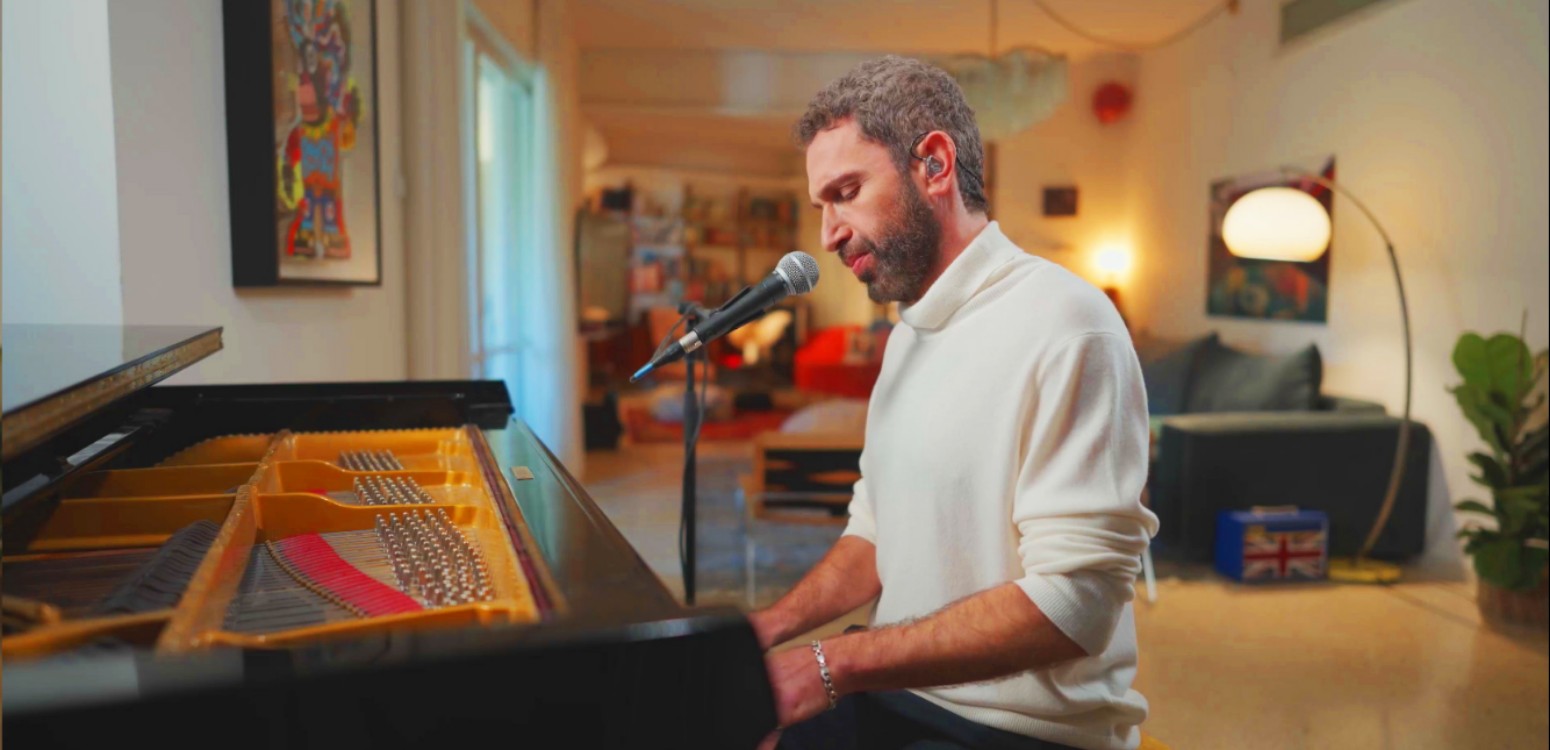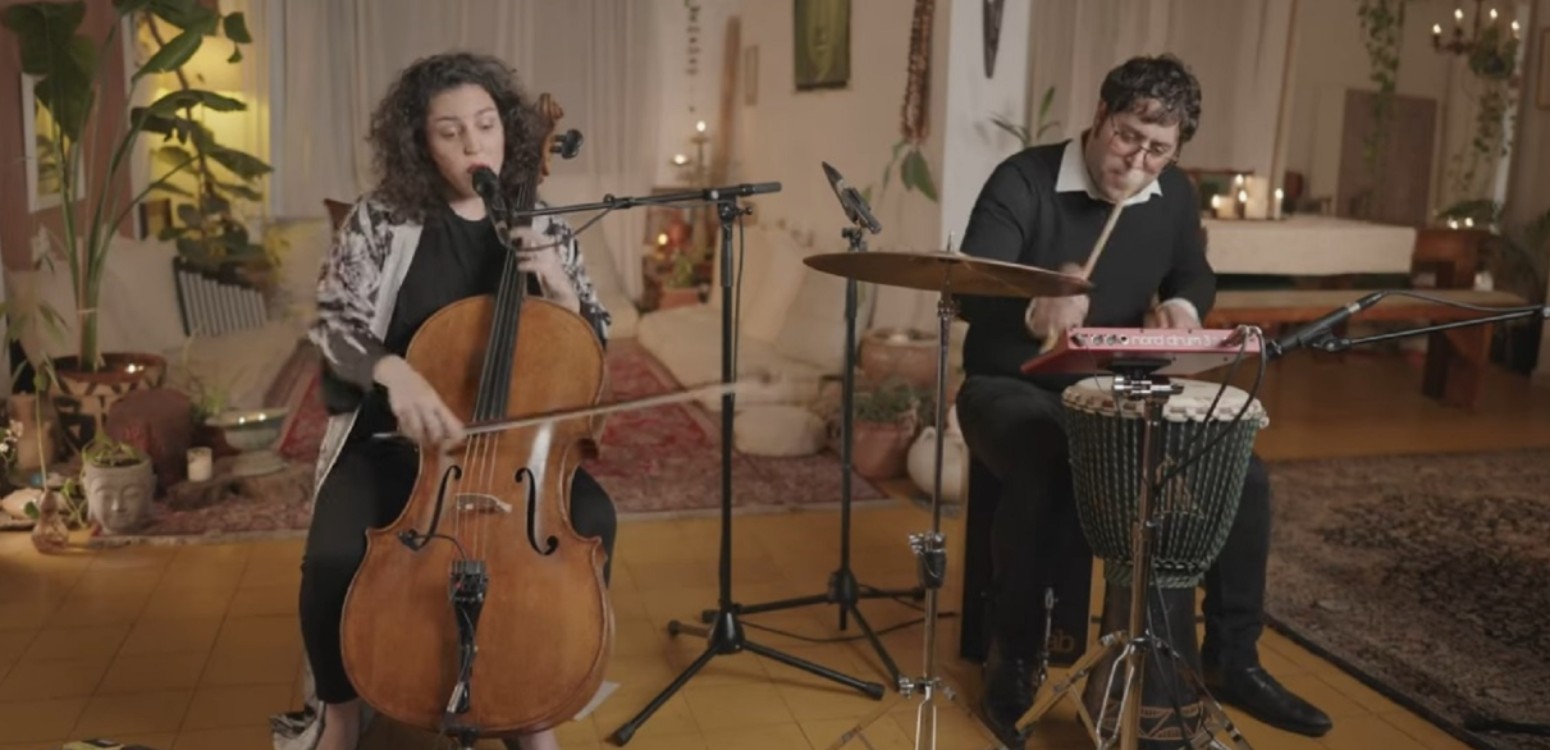
Ani Ma’amin (“I Believe”)

The great Russian-born Hebrew poet Shaul Tchernichovsky (1875–1943) is well known as one of the founding fathers of modern Hebrew poetry. The prolific poet brought with him a secular, universal, and Hellenistic spirit, writing idylls, sonnets, ballads, lyric poetry, nature poetry, and other forms of poetry influenced by European and ancient Greek traditions – all in the renascent Hebrew language, which he helped revolutionize. Here are ten things about Tchernichovsky you might not know.
He was also a practicing doctor his entire adult life
Tchernichovsky is remembered as one of the giants of Hebrew poetry, but medicine was his day job – for life. He studied medicine at the University of Heidelberg at the very beginning of the XX century, then completed his degree at the University of Lausanne in Switzerland, and also earned a medical qualification from the Imperial University of St. Vladimir in Kyiv. In 1910 he opened a clinic in St. Petersburg, and when World War I broke out he served as a military doctor in Minsk and St. Petersburg. He later worked as a physician for the zemstvo (regional government) and the Red Cross in Odessa. He never gave up on his calling and continued working as a physician in the Land of Israel.
His wife never learned Hebrew
Tchernichovsky met his wife, Melania Karlovna von Hosius-Horbacewicz (1879-1971), while studying medicine at the University of Heidelberg. She was a Russian Orthodox noblewoman of Polish-German descent who had previously been jailed in Russia for anarchist activities before arriving in Heidelberg to study history and philosophy. Throughout their marriage, Melania remained a devout Orthodox Christian and refused to convert to Judaism. She immigrated to Israel only in 1937 – six years after her husband – and although she lived there for forty years, she never learned Hebrew, meaning she could never read a single line of Tchernichovsky’s poetry. She outlived him by nearly three decades, eventually settling in their daughter’s home in Haifa, and was buried in the Greek Orthodox section of a cemetery in the city.
His only daughter converted to Judaism
Tchernichovsky and Melania had one child: a daughter, Isolda (known as Iza, 1905-1974). Unlike her devoutly Orthodox mother, Iza chose a different path – she formally converted to Judaism through the Tel Aviv rabbinate. A bacteriologist by training, she studied in Paris before re-settling in Israel, where in 1939 she married a Haifa engineer named Avraham Vilensky, who had been a classmate of the poet Avraham Shlonsky (1900–1973) back in gymnasium.
He was rejected from jobs in Israel
Tchernichovsky first came to the Land of Israel in 1909, driven by Zionist conviction and looking for work as a doctor. He applied in Rehovot, but was rejected by the moshava’s members on the basis of a rumor that he had a gentile wife. He tried again in Kfar Tavor and was turned away there too, without explanation. He returned to Russia, and it was only in 1931 – after years of moving around and a short stint in the United States – that he finally settled in the British Mandate of Palestine for good, living in a small apartment on Ahad Ha’am Street in Tel Aviv and working as a school doctor.
He named one of Israel’s most famous hospitals
In 1934, Tchernichovsky and the poet Ya’akov Cahan (1881-1960) put their heads together to find a name for a new hospital opening in northern Tel Aviv. They chose the name “Assuta” – a word from Aramaic that appears in the Talmud and simply means “health.” Assuta grew into one of Israel’s best-known hospitals, and still operates today, having moved in 2009 to a modern building in the Ramat HaHayal neighborhood of Tel Aviv.
He spent his final years living in a Greek Orthodox monastery
In 1936, Tchernichovsky’s wife and daughter moved into the residence of the Greek Patriarch at the San Simon monastery in Jerusalem, and when he was diagnosed with leukemia he joined them there. The great Hebrew poet lived out his final years as a guest in a Christian monastery. He died in Jerusalem on October 14, 1943, and was buried at the Trumpeldor Cemetery in Tel Aviv.
He felt a connection to King Saul
Beyond sharing a first name, Tchernichovsky felt a profound personal identification with King Saul and saw in him a tragic hero worthy of admiration – courageous, proud, and noble. He dedicated an entire cycle of poems to the king, most famously the ballad Be Ein Dor (“In Ein Dor”), written in his youth in Odessa, which depicts King Saul’s haunting visit to the witch of Endor (Ein Dor in Hebrew) on the eve of his death. In these poems, Tchernichovsky took an unmistakable stand: he sided with Saul against the rigid severity of the prophet Samuel, portraying the king as a fully human hero fearlessly marching into his final battle knowing he will die.
He translated Homer, a Finnish national epic, and Gilgamesh into Hebrew
Tchernichovsky was not only one of the greatest Hebrew poets – he was also one of the greatest Hebrew translators. His crowning achievements were his translations of Homer’s “Iliad” and “Odyssey.” But his reach was vast: he also translated “Kalevala,” the Finnish national epic, the ancient “Epic of Gilgamesh,” Shakespeare’s “Twelfth Night” (staged at Habima in 1930), and George Bernard Shaw’s “The Devil's Disciple” (also at Habima, 1931). Through his translations, Tchernichovsky brought some of the greatest works of world literature to the Hebrew audience for the first time.
He helped coin the Hebrew words for endless medical and natural terms
Tchernichovsky was also a builder of the Hebrew language. From 1923 he served on the Committee of the Hebrew Language (the forerunner of today’s Academy of the Hebrew Language), where his medical expertise and lifelong love of nature made him uniquely valuable. He was one of the founding figures of modern Hebrew medical terminology, sitting on official committees that coined Hebrew words for diseases, organs, and biological processes, and he took on the enormous task of completing and editing Dr. Aharon Meir Mazya’s monumental Hebrew medical dictionary. As a poet steeped in the natural world, Tchernichovsky also helped develop Hebrew terminology for botany and zoology.
His face is on the 50-shekel bill
Tchernichovsky is commemorated across Israel in more ways than almost any other Hebrew writer. Streets bearing his name run through Tel Aviv, Jerusalem, Haifa, Netanya, Herzliya, and dozens of other towns. Schools and parks are named after him, including Gan Shaul in Ramat Gan. The Hebrew Writers’ Association named its Tel Aviv home – Beit HaSofer, the Writers’ Home – in his honor. And perhaps most visibly of all, his portrait looks out from the 50-shekel banknote.
Main Photo: Shaul Tchernichovsky 1927\ Wikipedia