Ani Ma’amin (“I Believe”)


On the front of a Bavarian coin that has never been displayed to the public is a portrait of a bishop, symbolizing his religious and secular authority. But on the back, alongside three towers representing the city, appears a name written in Hebrew letters: Yechiel. How did a Hebrew name end up on a German coin?
The answer leads to a fascinating chapter in the history of Jewish life in medieval Germany. As early as the Middle Ages, Jewish and Christian communities maintained economic ties, and some Jews served as financial experts or were responsible for minting coins on behalf of Christian rulers. This small coin opens a window onto a much broader story: it challenges the stereotype of Jews as merely moneylenders, while also revealing how the appearance of Jewish names and symbols on German coins reflected a Christian theological view of Jews as witnesses to the truth of the New Testament.
The art of becoming
Some 700 years later, the German and Jewish worlds meet again in the colourful, strange and mesmerising drawings of the Jewish poet and artist Else Lasker-Schüler, who fashioned her identity out of a sense of alienation and exile. Against the backdrop of early XX-century Berlin, where assimilated Jews lived alongside immigrants from Eastern Europe, she chose not to belong fully to either world, but instead to create a third identity of her own – one that combined Eastern, Jewish and androgynous imagery.
She turned stereotypes meant to mock Jews into emblems of aristocracy and artistic self-invention, presenting identity as an act of imagination and choice rather than inheritance. After the First World War, she lost her son and witnessed the collapse of Berlin’s bohemian world. With the rise of the Nazis, she was forced to flee Germany. In Jerusalem, the city she had dreamed of in her poetry, she found loneliness and alienation, and in her final years lived among German émigrés until her death in 1945. Lasker-Schüler emerges as a figure inhabiting an in-between space, refusing unequivocal definitions and turning identity itself into a work of art.
A portrait of a world about to disappear
Around the same period, in 1930, Lotte Laserstein painted Evening over Potsdam. One of the most promising talents of Berlin’s young generation of artists, Laserstein saw her career cut short by the Nazis’ rise to power and, in 1937, was forced to flee to Sweden because of her Jewish origins.
The painting depicts five of her friends sitting around a table on a rooftop overlooking the city. At first glance, almost nothing happens: the meal is nearly over, the group sits together, and each person seems absorbed in their own thoughts. Yet the dark clouds, the fading light and the dog lying beneath the table, together with a composition that echoes Leonardo da Vinci’s “The Last Supper”, lend the scene a symbolic dimension of betrayal, loss, and an ominous future.
In retrospect, the painting has been seen as a visual prophecy of the rise of Nazism: not a direct depiction of a political event, but a sensitive rendering of a collective state of mind, in which an entire generation sensed that the liberal and cultured world of the Weimar Republic was about to disappear with nightfall.
When collections tell Jewish stories
These three objects are now held in different collections of the Berlin State Museums. Access to them for filming the new German season of the series “Let the Objects Speak” was made possible by a new, multi-year cooperation agreement between Beit Avi Chai and the Prussian Cultural Heritage Foundation (SPK), one of the largest and most important cultural organizations in Germany and around the world.
SPK oversees dozens of cultural institutions, including museums, libraries, archives and research institutes. Among them are the Berlin State Museums (Staatliche Museen zu Berlin), the Berlin State Library, major archives and research institutes, as well as the museums located on Berlin’s Museum Island, a UNESCO World Heritage Site. Their collections span everything from archaeology and ethnology to art, literature and music, documenting thousands of years of human culture.
The timing is also hard to ignore. At a time when Israeli and Jewish cultural institutions are facing boycott campaigns, antisemitism and pressure to scale back international cooperation, the agreement seeks instead to deepen a long-term cultural partnership.
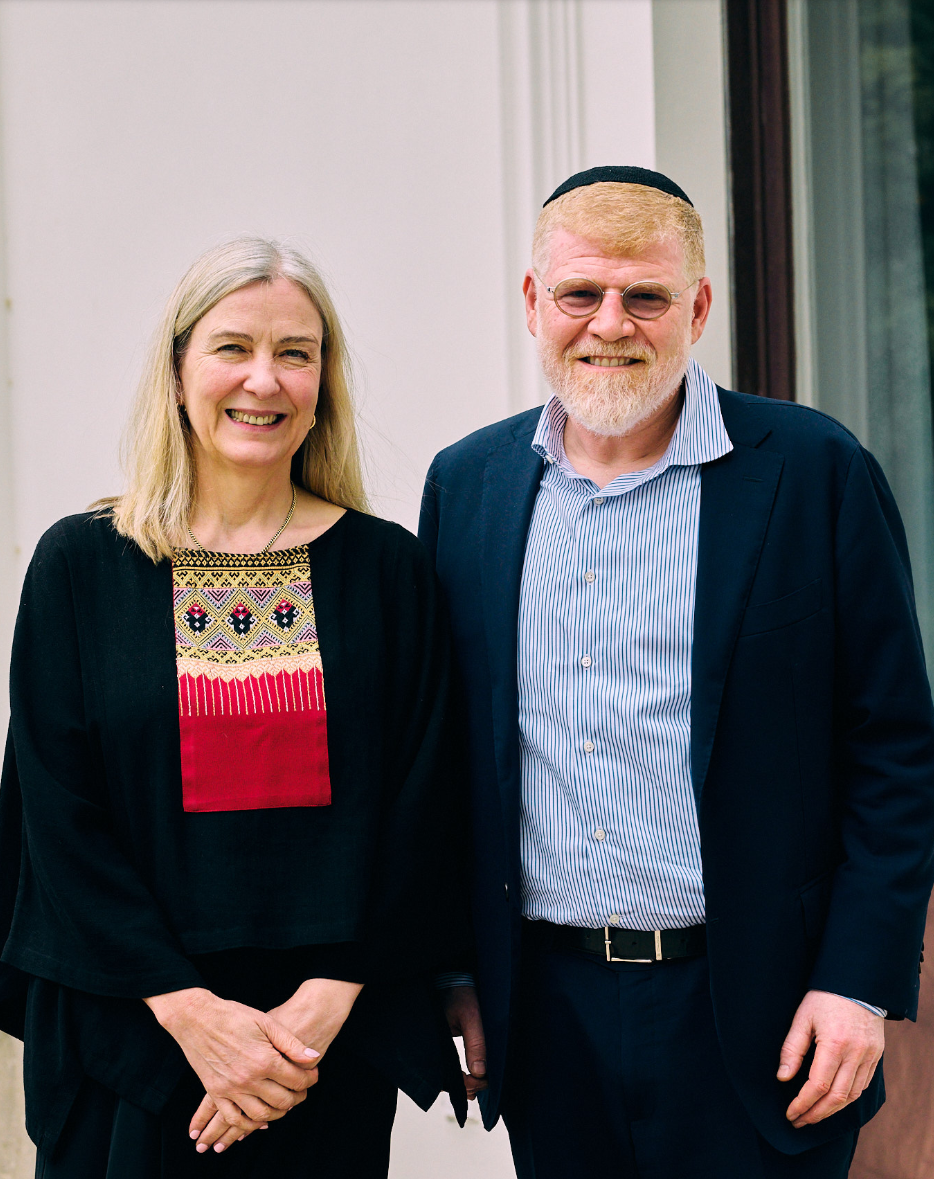
“Precisely at this time, the agreement we have signed sends a particularly important message,” says Dr David Rosenson, CEO of Beit Avi Chai. “It reflects a shared commitment to research, cultural exchange and the belief that Jewish history and culture have a natural place in the world’s leading museums and in global cultural discourse. Together with the SPK, we will bring extraordinary objects and the Jewish and universal stories they carry to audiences around the world.”
Connecting the Jewish story across continents
The German season of Let the Objects Speak follows previous collaborations between Beit Avi Chai and institutions including The Metropolitan Museum of Art, MoMA, the Morgan Library & Museum, the Museum of Jewish Heritage and the Jewish Theological Seminary of America in New York, the Hermitage Museum, the Pushkin Museum, the Israel Museum and the Tel Aviv Museum of Art.
The filmed series will be the first stage of the multi-year collaboration with SPK. As part of the agreement, Beit Avi Chai teams will work with curators, researchers and subject-matter experts from the various institutions; gain access to selected historical objects; and jointly develop films, articles and digital content in Hebrew, English, German and Russian, to be distributed through educational and museum programmes as well.
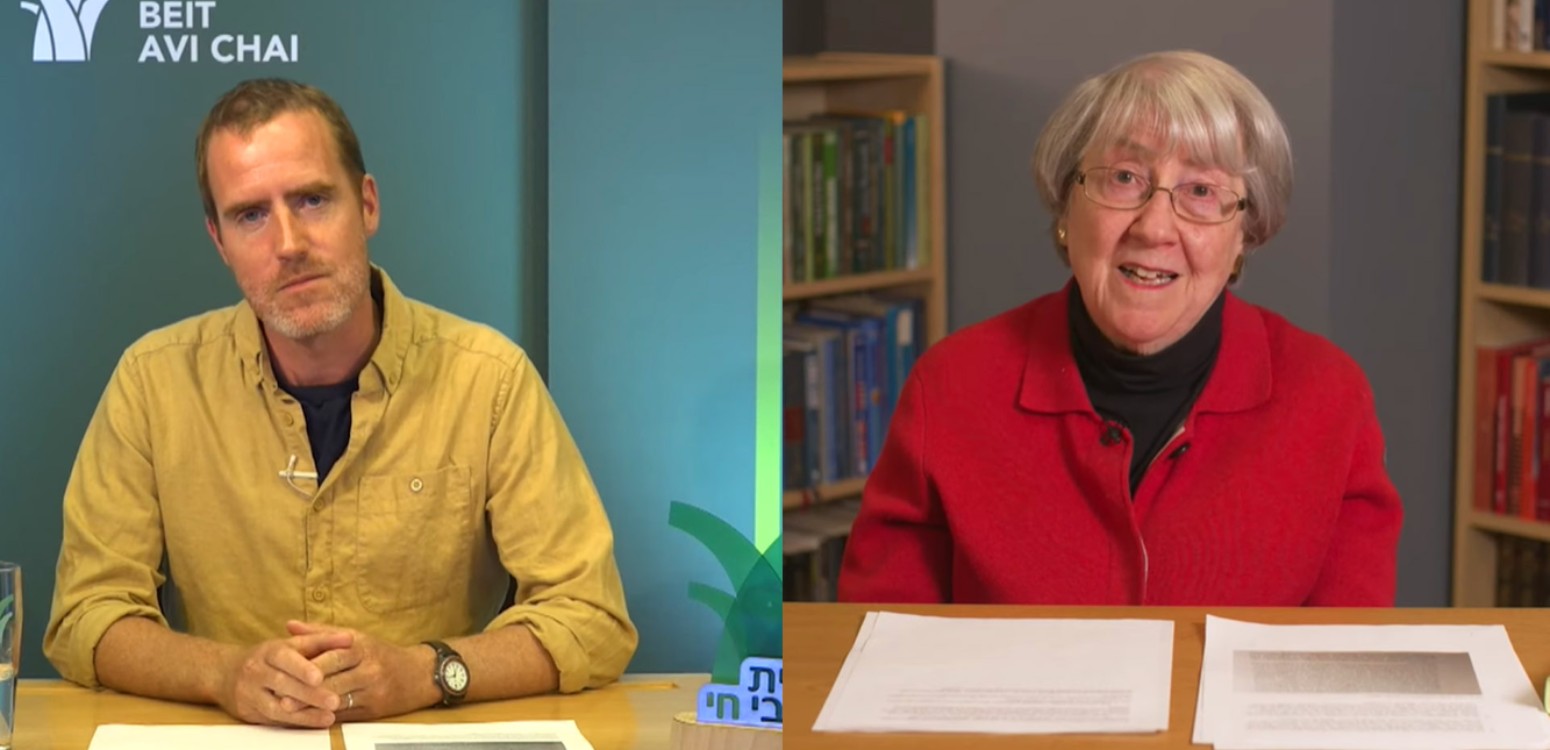
As work in Berlin gets under way, the American season of the series, hosted by writer and journalist Matti Friedman, is in the final stages of editing, with its first episodes expected to be released this autumn.
Through these collaborations, Beit Avi Chai is seeking to connect the Jewish story across continents – through the smallest details of art and culture, scattered across the globe.
This article was originally published in Hebrew.
Main Photo: From the series "Let the Objects Speak"