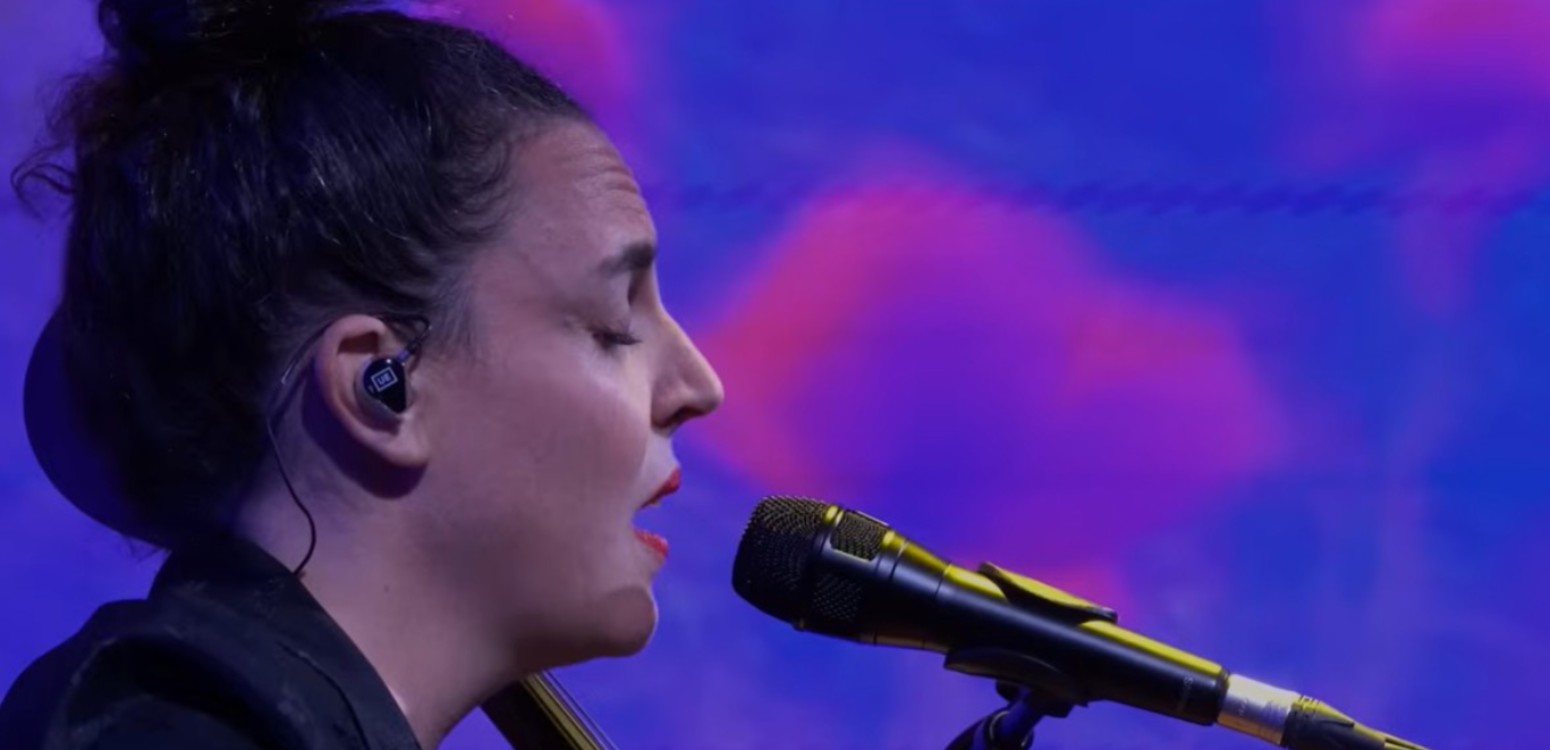
Ani Ma’amin (“I Believe”)

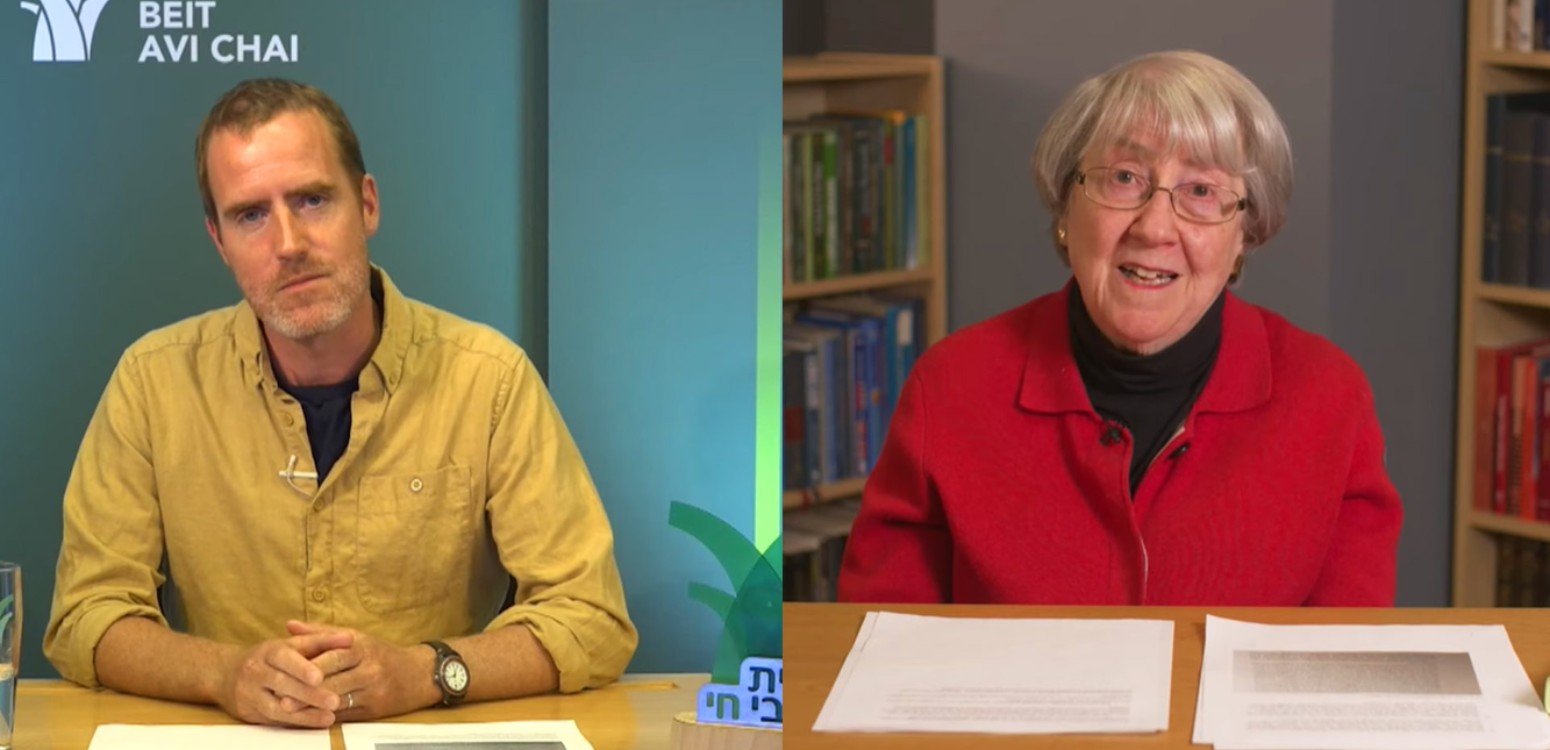
Every autumn, Jewish communities experience the long blast of the shofar, fasting on Yom Kippur, dwelling in the Sukkah, shaking the four species in four directions, and the solemnity of Yizkor. The history of these rituals is the subject of a series at Beit Avi Chai, “Rethinking the Tishrei Holidays: Ritual, History, and Renewal,” by Rabbi Prof. Dalia Marx. She holds the Rabbi Aaron D. Panken Chair in Liturgy and Midrash at Hebrew Union College–Jewish Institute of Religion’s Jerusalem campus. A tenth-generation Jerusalemite, she is the author of several books, including “From Time to Time: Journeys in the Jewish Calendar”.
Why address Rosh Hashanah, Yom Kippur, Sukkot, and the Yizkor service (which takes place throughout the festive calendar) together rather than four separate case studies? For Marx, the answer lies less in the holidays themselves than in the structure they share. “What unites Jews of all denominations and political views is Jewish time,” she says. “When it comes to Jewish time, we all agree when Shabbat is; you can observe Shabbat this way or another, but we agree on the time, and this is very precious.” She points to the Second Temple period, when rival groups fought bitterly over the calendar itself. “Now we take the unity of the calendar for granted, but we shouldn’t,” she says. Following the Second Temple period, however, the calendar coalesced and became widely accepted. It is this insight that runs through Abraham Joshua Heschel’s famous description of Shabbat as a ‘cathedral in time’” – a phrase Marx returns to often, including in her own book on the subject, “From Time to Time”. “We don’t always feel secure in space,” she says, “but we always feel secure in time, even though it’s mysterious.”
In times of trouble, people seek out the divine more than ever – the main way Jews have done this, Marx notes, is through liturgy and theology. This links these ancient sources to their most contemporary counterpart: the wave of new Yizkor prayers written since October 7, 2023. Marx illustrates this with the fable about a six-year-old who had never spoken until he one day announced that there wasn’t enough salt in the soup; when asked to explain himself, he said that until now, everything had been fine. “Following tragedies, there’s an increase in liturgical creativity,” she says. “Hundreds of prayers and hymns have been composed since October 7.” She notes that the same happened following earlier catastrophes like the Crusades and the destruction of the Temple, arguing that whenever Jewish life is disrupted, “this is when Jews express their anxieties, hopes, fears, sorrows, and joy” in new liturgical form. In an interview with the Times of Israel, Marx described collecting many of these new October 7 prayers herself and depositing them with the National Library in Jerusalem, calling the scale of the phenomenon unprecedented in Israel’s history.
Echoes of creation
These are not the only rituals that might seem ancient and settled. The first is the shofar – “Echoes of Creation,” in Marx’s framing – a non-verbal ritual within a tradition otherwise full of words. “Jewish practice is very wordy,” she says. “The High Holiday prayers are especially long. The shofar, though, is a non-verbal ritual; it’s not even music. It’s a primordial, ancient voice.” The open question, as she frames it, is what the sound is actually meant to do. Maimonides, in the Mishneh Torah’s Laws of Repentance, reads the shofar blast as an alarm addressed to the sleeping conscience, while another possibility is that the shofar’s sound reaches toward the divine itself.
Marx refers to the halachic debate over whether the shofar may be sounded on Shabbat, which reflects important questions related to community and authority. According to the Mishnah (Rosh Hashanah 4:1), when Rosh Hashanah fell on Shabbat in Temple times, the shofar was blown in the Temple itself but nowhere else in the country. The Temple’s destruction in 70 CE raised a real question: would the shofar ever again be heard when Rosh Hashanah fell on Shabbat? Marx recounts how Rabbi Yochanan ben Zakkai, newly relocated to Yavneh, resolved the dilemma by acting first and arguing afterwards: “He said we should first blow the shofar and then discuss the matter. They blew it on Shabbat and then his opponents came to discuss it. He said there’s nothing to discuss; we already blew it.” For Marx, this was “an act of leadership during a difficult time – he knew that people needed to hear the shofar.”
A historical afterthought
Regarding Yom Kippur, Marx addresses the provocative claim that the most solemn day in the Jewish calendar might have been a historical afterthought. Scholars have offered evidence for this. One of them is Leviticus 16, which lays out the Torah’s account of the day’s rituals, culminating in the following verse: “And this shall be to you a law for all time: In the seventh month, on the tenth day of the month, you shall practice self-denial; and you shall do no manner of work, neither the citizen nor the alien who resides among you.” Marx points out that this closing verse, which establishes the day as a fixed yearly practice, comes only at the end of a chapter otherwise devoted to purifying the Tabernacle after it was defiled by the deaths of Aaron’s two sons. For some Bible scholars, this means that the communal Day of Atonement was layered onto an older, narrower ritual rather than instituted alongside it from the start. As supporting evidence, Marx cites the timing of Solomon’s dedication of the First Temple, which biblical chronology (1 Kings 8:2, 65-66 and 2 Chronicles 7:8-10) places in the seventh month around the festival of Sukkot. In other words, if Yom Kippur had already carried its later weight, Solomon might not have dedicated the Temple so close to it. “That’s why it feels like an afterthought,” Marx says.
Four species, one people
Sukkot, of course, is also worth inspecting: the ritual of the Four Species – the etrog, palm branch, myrtle, and willow that are bound and shaken together each day of the festival, alongside dwelling in the sukkah. This obligation originates in Leviticus 23:40: “On the first day you shall take the product of hadar trees, branches of palm trees, boughs of leafy trees, and willows of the brook, and you shall rejoice before the ETERNAL your God seven days.” Marx is struck by how much weight later tradition placed on four plants the Torah itself barely explains. Each, she notes, corresponds to a different ecosystem within the Land of Israel, and in a teaching from the midrash Vayikra Rabbah (30:12), to a different part of the human body, so that “when you embrace them you embrace the human being in its entirety.” The same midrash interprets the four species as four types of people: the etrog, which has both taste and fragrance, represents those who combine learning with good deeds; the lulav (palm branch), with taste but no scent, represents those with deeds but no learning; the myrtle, with scent but no taste, represents those with learning but no deeds; and the willow, with neither, represents those with neither. “When you hold them together,” Marx says, “you hold the entirety of the people of Israel.” Marx also addresses the wider rabbinic fondness for organizing produce into sets – the seven species with which the Torah praises the Land of Israel in Deuteronomy 8:8 (“a land of wheat and barley, of vines, figs, and pomegranates, a land of olive trees and honey”) alongside other groups of five and six.
Grief in new forms
The wave of new Yizkor prayers written since October 7 brings the discussion full circle. Yizkor is generally understood to have originated as a fixed communal rite in the Rhineland Jewish communities following the Crusades, and Marx traces the memorial service through its historical layers. What has happened since October 7 is, in her account, not simply an addition of names but a genre-spanning outpouring of pained creativity: “there’s a lot of creativity and innovation through different genres, different kinds of prayers,” written by rabbis, poets, and bereaved families alike, “in very different denominations.”
In general, Marx resists offering a single tidy theory of how Jewish ritual changes – whether by rabbinic decree, slow reinterpretation, or collective improvisation in a moment of crisis. What she offers instead is a way of noticing that these rituals were made, and remade, by Jews responding to their own circumstances. Tragedy, she claims, is often the greatest catalyst for creativity. This, she suggests, is exactly what is happening again today.
Translation of most Hebrew texts sourced from Sefaria.org
Main Photo: Jews Praying in the Synagogue on Yom Kippur\ Wikipedia