Ani Ma’amin (“I Believe”)


Each year, in the run-up to Tisha B’Av, Jews enter the Three Weeks of mourning. During this period, the destruction of the First and Second Temples, the fall of Beitar, and other national catastrophes are commemorated through fasting, lamentation, and prayer. Since October 7, though, many Jews have found themselves asking a difficult question: How much more sadness do we need?
“We’ve suffered so much in these last few years,” says Rabbi Meesh Hammer-Kossoy, the Rosh Beit Midrash at Pardes. “We need to shift our relationship to the Three Weeks. Rather than thinking about them as simply three weeks of mourning, it’s a chance for us to draw meaning from our historical tragedies and use it as an opportunity to reflect on today’s challenges.”
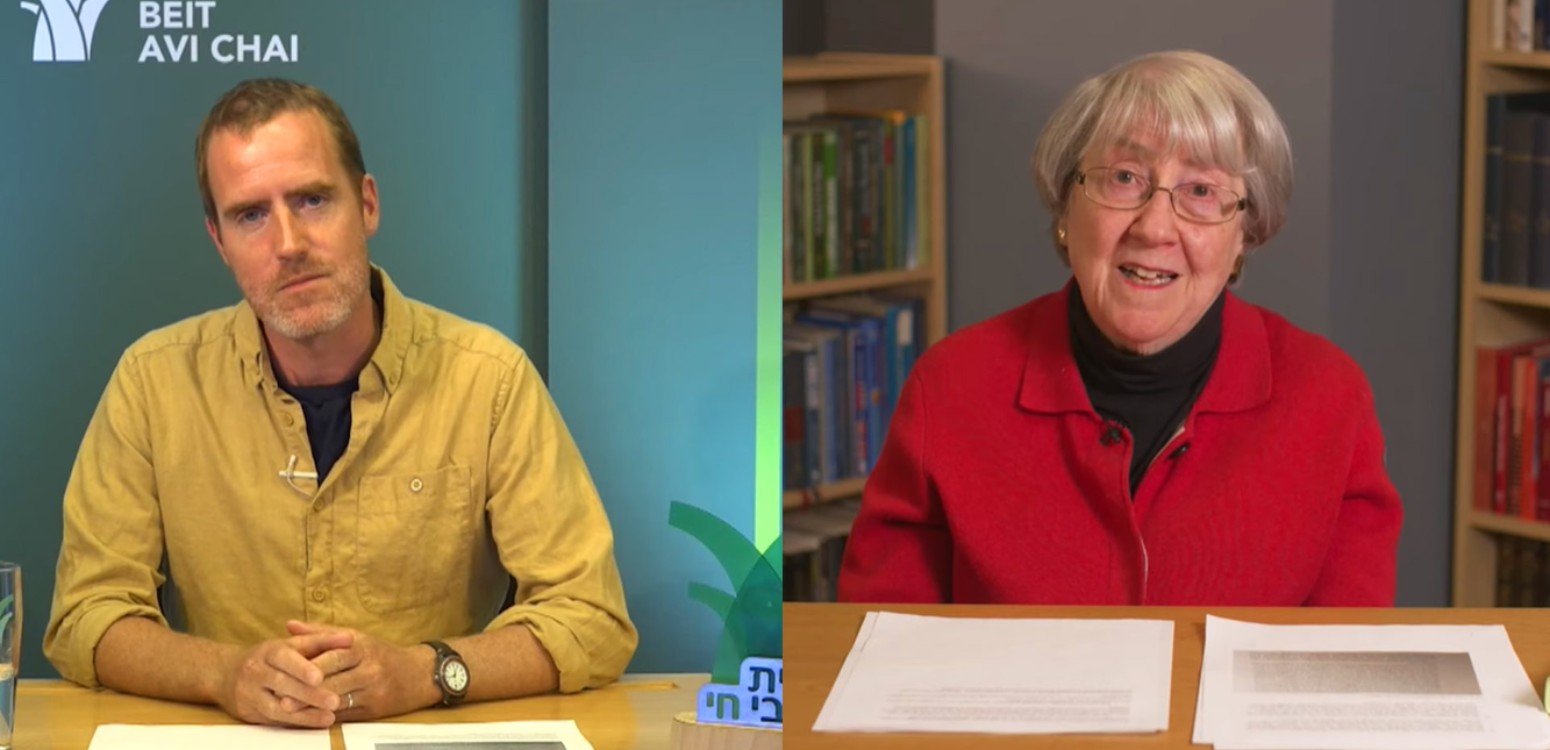
Hammer-Kossoy’s upcoming Beit Avi Chai course, “The Eternal Nation: Modern Messages of Agadot of Destruction,” explores the rabbinic stories that emerged from the destruction of the Second Temple and the defeat of the Bar Kokhba Revolt. These texts are filled with grief, loss, and devastation. But, perhaps surprisingly, they are also driven by something else: an insistence that Jewish history does not end in catastrophe.
Foundational narratives of Jewish courage
“The Mishnah identifies five things we are mourning at this time of year,” Hammer-Kossoy notes. “Two of them are connected to the Bar Kokhba Revolt. The rabbis found meaning in their suffering back then, and I hope these stories can inspire us today.”
The stories of Rabbi Akiva, Rabbi Hananiah ben Teradion, Rabbi Yehuda ben Bava, and others have become foundational narratives of Jewish courage, spiritual resistance, and martyrdom. Hammer-Kossoy argues that these stories are often misunderstood. “The rabbis who died a martyr’s death didn’t seek to die,” she says. “But they did try to create meaning from their deaths.”
Her opening session examines how these narratives frame sacrifice not as an embrace of death but as a commitment to a greater purpose. The title, “Dying with an Eye Toward Life,” captures that tension. “By letting go of your temporal life, you become a critical link in the Jewish story that could be called eternal life,” she explains. “Rabbi Akiva and Rabbi Hananiah ben Teradion both express this idea.” They view themselves as participants in a story greater than their own lives, one that extends beyond individual affliction and death.
Hammer-Kossoy remembers hearing a bereaved mother, Sarit Sussman, whose son Ben was killed early in the war in Gaza, describe her own tragedy in similar terms. “She said: ‘This story will have a happy ending’ – meaning the longer story. That perspective is also present in the martyrdom narratives. It’s not just about them.”
At the same time, she rejects simplistic readings that glorify self-sacrifice. “Each story also preserves the voice of someone who asks whether they really should be sacrificing their lives,” she says. “There are people who don’t choose to die a noble death and instead try to preserve their lives. That’s also a significant voice within the Jewish tradition.”
Even Rabbi Akiva, often portrayed as the quintessential martyr, did not seek death for its own sake. Instead, he continued teaching Torah publicly because he believed it was necessary for the long-term survival of the Jewish people. “When death came his way,” Hammer-Kossoy says, “he created meaning out of it.”
In the shadow of misery
The second session in the series shifts attention away from the martyrs themselves and toward those who lived in the shadow of their misery. Many Jews know the story of Rabbi Hananiah ben Teradion, who was executed by the Romans while wrapped in a Torah scroll. According to the Talmud, as the flames consumed him, he told his daughter that he could see the parchment burning while the letters flew upward to heaven. The image has become one of the most powerful symbols of Jewish resilience – and can be seen on the wall at the Pillars of Eternity memorial to October 7 in Sderot.
Hammer-Kossoy is equally interested in what happened afterwards. “Rabbi Soloveitchik talks about the glory of the heroism of the hour. The grand speeches, the symbolic actions. But in some ways, greater courage is what happens in the darkness of night.” Rabbi Hananiah’s wife, daughters, and son are all impacted by the destruction. Among them stands Bruriah, Rabbi Hananiah’s daughter. “She is the only female Torah scholar in the Talmud,” Hammer-Kossoy notes. “There are other female heroines, but she is the only woman presented as a genuine Torah scholar.” Viewed against the backdrop of her family’s suffering, Bruriah’s achievements take on a new significance: that of a survivor carrying the burden of a family legacy.
The rabbis also use these stories to explore dimensions of grief often absent from public narratives of heroism. In these, women become vehicles through which the emotional cost of tragedy is magnified and made visible. “The rabbis focus on the way women experience the pain of childbirth and family,” Hammer-Kossoy explains. “They become a magnifying glass through which we can see the pain all of us feel during personal or national loss. The rabbis are also sensitive to the danger of sexual violence,” which she notes is particularly relevant in the aftermath of October 7.
Renewal within catastrophe
While the rabbis transformed agony into meaning, they were careful not to transform it into sentimentality. “Rabbinic literature never romanticizes destruction,” Hammer-Kossoy says. “The pain is real.” One of her favorite examples comes from the opening pages of Tractate Berakhot. Rabbi Yose (Jose ben Halafta) enters one of Jerusalem’s ruined sites to pray. Elijah the Prophet awaits him outside. “Elijah rebukes him,” Hammer-Kossoy explains. “Rabbi Yose wants to immerse himself in the destruction, but Elijah pushes him to think about rebuilding.” When Elijah asks what he heard in the ruins, Rabbi Yose says that he heard a divine voice crying: “Woe to Me that I have exiled My children, and woe to the children who have been exiled from their Father’s table.” In other words, through God’s own mourning, the passage refuses easy consolation.
Even amidst Jerusalem’s ruins, mourning is not the end goal. “We’re trying to hold both inclinations at the same time,” Hammer-Kossoy says. “The power of destruction and the need to look forward.” This balancing act is addressed in the third session, ‘Turning Loss into Possibility,’ which examines how the rabbis search for renewal within catastrophe without denying the reality of suffering. This, she notes, carries risks. Looking for “silver linings” can trivialize tragedy or minimize pain. The reason the rabbis persist is that they believe survival requires a vision of life after the destruction.
Models of consolation
The final session focuses on one of the most famous stories in rabbinic literature. Standing amidst the ruins of the Temple, Rabbi Akiva sees a fox emerging from the Holy of Holies. While his colleagues weep, he laughs. The fulfilment of prophecies of destruction, he argues, confirms that prophecies of redemption will also be fulfilled. “Do we find that genuinely compelling?” Hammer-Kossoy asks. “Or does it require a kind of cognitive dissonance?”
Rabbi Yohanan ben Zakkai, who lived through the destruction itself, develops a model of consolation rooted in action. “He tells people that they now have something better,” Hammer-Kossoy says. “Gemilut Hasadim. Acts of loving-kindness.” Something similar happens when his students try to console him after the death of his son. They cite examples of biblical figures who endured loss, but he rejects their comparisons. “Hearing that others suffered doesn’t make him feel better,” Hammer-Kossoy notes.
Only one student succeeds. He compares human life to a deposit entrusted by a king. The owner worries constantly about damaging it. When the king finally reclaims it intact, the custodian feels relief. “The point,” Hammer-Kossoy explains, “is that Rabbi Yohanan ben Zakkai was given a deposit from God in the form of his son. He did the best he could. That’s the goal.”
Nachum Ish Gamzu and Rabbi Akiva represent a different model. “Everything that happens to Gamzu, he says, is for the best,” Hammer-Kossoy says. “Either it serves a long-term purpose, or it is a form of correction he is willing to accept.” Akiva extends that perspective into history itself. “I may be suffering now,” Hammer-Kossoy summarizes, “but I’m placing that pain within a larger picture. In the long run, everything will be for the best.”
The rabbis who shaped these stories were not philosophers speculating about suffering. They were survivors of a national catastrophe. They lived among the ruins. Hammer-Kossoy believes that this insistence on hope isn’t merely permitted within Judaism but demanded. “Being forced to hope means believing that in the long run you are part of something much bigger than yourself,” she concludes.
Main Photo: Bronze statue of Bar Kokhba, sculpted in 1905. Currently in Eretz Israel Museum \ Wikipedia