Ani Ma’amin (“I Believe”)


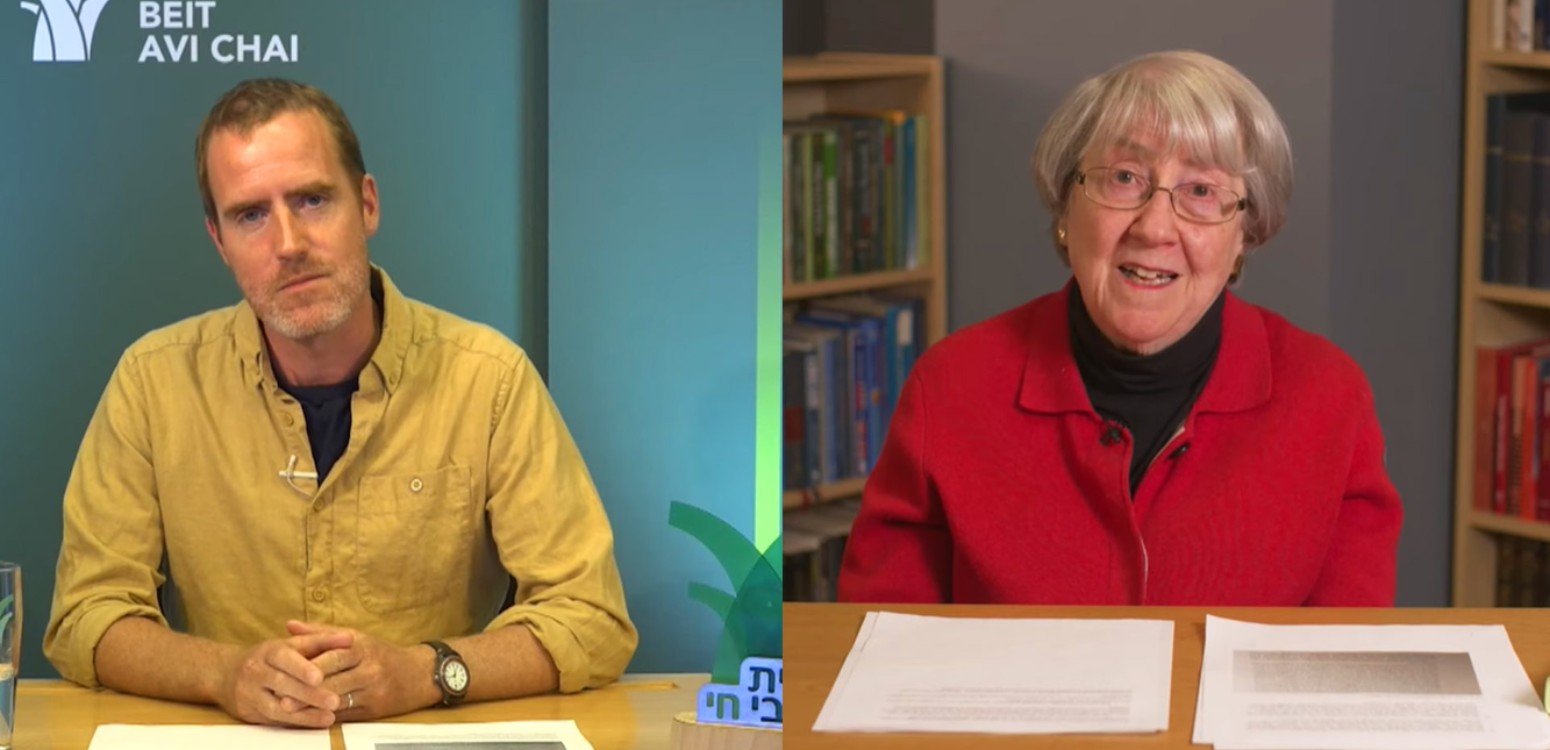
Have you ever heard of Simon Frug? If you live in Israel, you might live on a street named after him, but even then, you probably don’t know much about him. It turns out that we once had another national poet who wrote in Russian, in Yiddish, and a bit in Hebrew. He was admired by his contemporaries, but his name has been completely erased from the collective Hebrew memory. Which is exactly why I spoke with the poet and literary scholar Dr. Velvl Chernin about the tragic, important, and impressive figure of Simon Frug (1860–1916) – one of the greatest poets of Odessa and of the Lovers of Zion movement.
Let’s start from the beginning. Who was Simon Frug?
“Shaul Tchernichovsky wrote an article about Jewish literature in the Russian language, which was published in a Russian-language Jewish encyclopedia, and in it he described Frug as the best Jewish creator writing in Russian. Tchernichovsky later wrote in another article that Frug influenced all the new Hebrew poetry. Frug was truly a poet worthy of the title, a Jew by origin who wrote in Russian and never converted. He was, in the real sense, a national poet.
“The first national poet of modern Hebrew literature was Judah Leib Gordon (1830-1892); after him came Hayim Nahman Bialik (1873-1934), and Frug was the poet standing between them. Bialik was influenced by Frug – he wrote about this in his letters – and there is even research dedicated to the influence of Frug on Bialik’s poetry.”
Bialik read Frug in Russian?
“He read him in Russian and also in Yiddish. Bialik grew up in Ukraine. Bialik spoke Ukrainian, but never formally studied Russian, and the first things he is said to have read in Russian were Frug’s poems. Frug himself grew up in a Jewish agricultural colony. Later he moved to the city of Kherson on the shores of the Black Sea, and from there he sent his first writings to the journal Voskhod (‘Sunrise’), a monthly Russian-Jewish periodical of the Haskalah movement, published in St. Petersburg. He won first place in a writing competition, and as a result the maskilim of St. Petersburg decided to bring him to the city. St. Petersburg was outside the Pale of Settlement, and in order to let him join the circle of educated Jews living there, they had to register Frug as a domestic servant in the home of one of the city’s Jewish intellectuals. When he moved to St. Petersburg, he became the neighbor of the Jewish writer and historian Simon Dubnow (1860–1941), and the two became close friends.
“At that time, Frug was considered an up-and-coming and highly regarded poet, and the national poet of the time, Judah Leib Gordon, wrote admiring words about him, dedicating them ‘to the young poet, the swift writer, who sings the Lord’s song in a foreign tongue, Simon Shmuel Frug.’ Frug was seen as the next national poet, and he wrote in three languages – mainly in Yiddish, in Russian, and a bit in Hebrew. Even his Yiddish poems were distinctly Zionist.”
Writing modern poetry in Yiddish
“Russian literary tradition was already very evolved, with high language and complex poetic structures,” Chernin says. “Yiddish, on the other hand, was considered a low language – the language of the street. One of Frug’s great innovations was his ability to write professional, modern poetry also in Yiddish. His last poems were written in Hebrew. But it was his Russian and Yiddish writing that had the strongest influence on modern Hebrew poetry, particularly on Bialik and Tchernichovsky. Frug was a learned Jew writing in Russian, yet his Russian poetry dealt with Jewish nationalism and Zionism. His Yiddish poetry, by contrast, was groundbreaking. Frug was the creator of modern Yiddish poetry. Before him, Yiddish poems were simple folk songs, and Frug was the first to elevate Yiddish by applying to it the sophisticated poetic and rhetorical tools of contemporary literature, and the first to take Yiddish poetry seriously and turn it into something equal in value to the poetry of any other language. But this bilingualism is also part of the tragedy of his fate.”
Why is he a tragic figure?
“Jewish national poetry in Russian was relevant to the first generation of educated Jews, who were still connected to their roots, but later, there was no longer any need for Jewish Russian poetry. The Russian language did not need another poet, and the Jewish maskilim were no longer connected to their Jewish national identity. Nor was there room for a Jewish national poet in Yiddish; most of Yiddish literature at the time was associated with non-Zionist movements like the socialist Bund, and Frug fell between the cracks. It also didn’t help that he fell in love with a Christian woman – something common among maskilim of his period. Their only daughter, who was born out of wedlock because Frug refused to convert and therefore could not marry his partner, died at only 15.
“The first generation of Zionists still valued Frug greatly, and many streets across the country were named after him – including streets in Tel Aviv, Haifa, Holon, Rehovot, and other cities. In the early years, his poems in the Hebrew translation were still taught in high schools throughout the country, but eventually he was forgotten, and today the person once considered a national poet has become an unfamiliar name.
“Critics praised him for introducing into Yiddish all the advanced and modern poetic and rhetorical tools that Yiddish poetry had lacked before him. Later came other poets – such as Bialik with his Yiddish poetry, and later Uri Zvi Greenberg (1896–1981) – who continued and refined his revolution, so that the great innovation he had introduced no longer seemed remarkable, and he was left behind.
The missing link
“Frug died at 55 in Odessa, where he lived in his final years. During World War II, Odessa was occupied by Nazi and Romanian forces, and when the Romanians retreated at the end of the war, they destroyed the Jewish cemetery where Frug was buried. Rabbi Moses Rosen (1912–1994), who became the Chief Rabbi of Romanian Jewry after the Holocaust, was walking one day in Odessa and happened to see Frug’s gravestone lying there. He was educated enough to recognize immediately whose gravestone it was, and he contacted the State of Israel, which brought the gravestone to the country. And so, the gravestone of the Jewish-Russian poet who wrote Zionist poetry in Russian, Yiddish, and Hebrew now stands in the Trumpeldor Cemetery in Tel Aviv.”
Why should we remember him today?
“People who study the history of modern Hebrew literature usually begin with the literature that emerged at the end of the XVIII century, with the German Haskalah and the modern Jews of Italy, and whoever follows that continuum often skips straight from Judah Leib Gordon to Bialik. Within that continuum, Frug is a very important figure, because he is the link between Gordon and Bialik. There was no direct link between Gordon and Bialik. When Gordon died in St. Petersburg in 1892, Bialik was only 19. He had just published his first poem and returned to his hometown, and several more years passed before he became the well-known and beloved national poet he would be. The one who eulogized Gordon was Frug, who promised in his eulogy that the project of national Hebrew literature would not cease, despite Gordon’s personal despair who had asked himself and his readers, ‘For whom do I labor?’ And indeed, the chain was not broken. Frug continued to write Zionist poetry, some of it in Hebrew; then came Bialik, and the rest is history.
“Many people think that Jewish literature consists only of sacred texts such as the Mishnah and the Talmud. I am personally a religious man, but I believe there is value in reading more modern Hebrew literature as well. We tend to look down on those who can no longer read ancient Hebrew texts, but by the same measure, we must not flee from the more modern Hebrew texts. If we don’t know how to read them, we’ll lose our connection and access to the ancient texts as well.”Top of Form
This article was originally published in Hebrew.
Main Photo: Simon Frug\ Wikipedia