Ani Ma’amin (“I Believe”)


The Babylonian Talmud (Shabbat 119a) describes a man called Yosef Mokir Shabbat, “Yosef who honors Shabbat.” He had a gentile neighbor who was warned by astrologers that his wealth would pass to Yosef. To avoid this outcome, the neighbor sold everything, bought a single precious stone, and sewed it into his hat. The wind then blew the hat into a river and a fish swallowed it. The fish was caught and brought to market just before it closed on Friday, where it was bought by Yosef, who found the jewel inside. The moral of the story is clear: whoever puts effort into keeping Shabbat is rewarded.
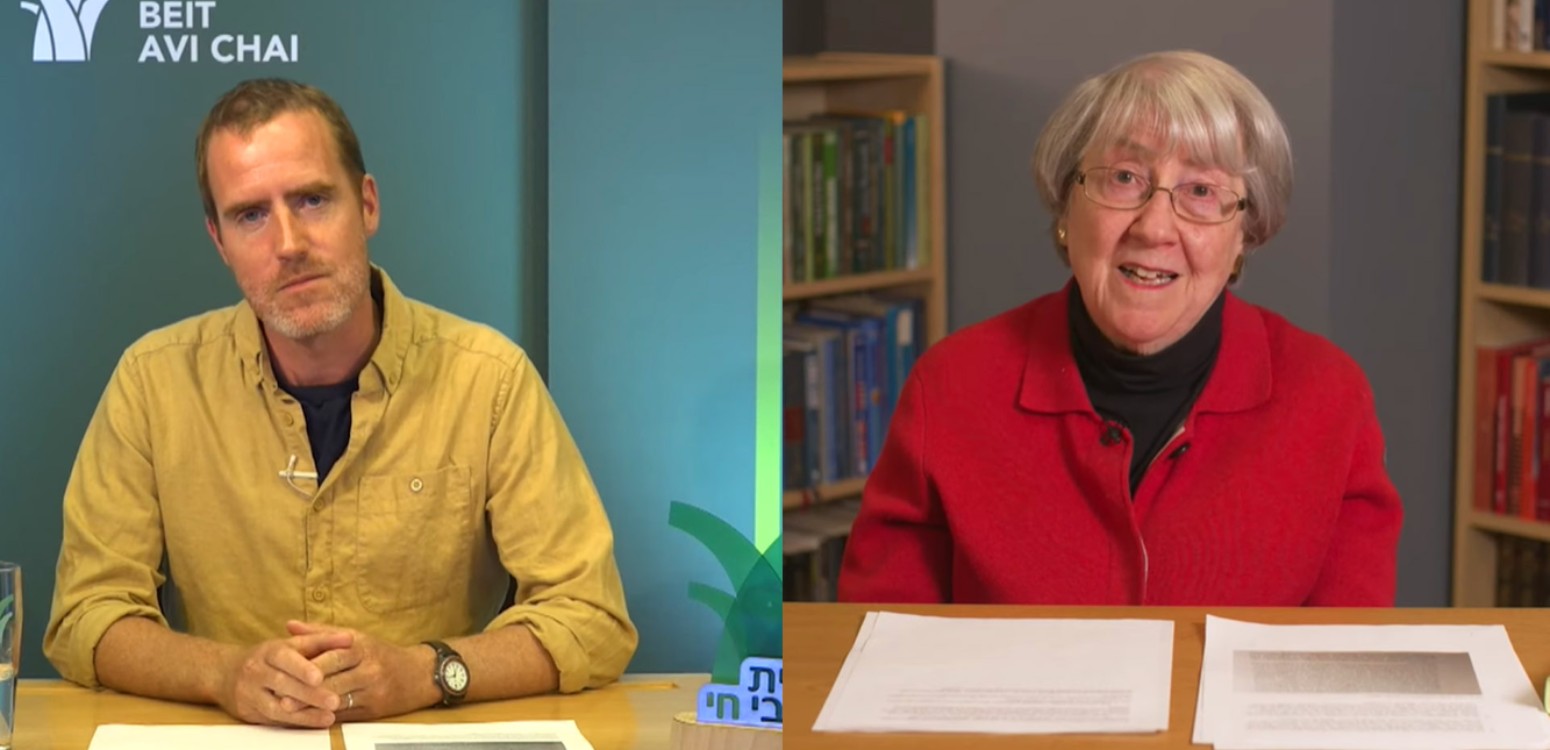
The story, however, is much older than the Talmud. “We have this story in Herodotus already,” says Dr. Gila Vachman, who teaches Midrash and aggadah at the Schechter Institute of Jewish Studies and the Hebrew University of Jerusalem. In the Greek historian’s fifth-century BCE “Histories,” Polycrates, the tyrant of Samos, is so fortunate that he is advised to throw away his most precious possession to avoid provoking the gods’ envy. He throws his signet ring into the sea, only for it to return days later inside a fish presented to him by a fisherman. Versions of this story turn up “among all kinds of cultures,” Vachman explains. The sages “use it to show how important Shabbat is, but they are using a model that we already know as a folklore type.”
The marketplace and the study hall
“The marketplace is the place of the common people, and the beit midrash is for the sages,” Vachman says. “The sages also went to the marketplace, but it’s not clear if the common people went to the beit midrash.” She “tries to move on the spectrum between these two places”, asking, whenever we read the words of the rabbis, “where are we really?” Every story has what folklorists call its Sitz im Leben, its setting in life. Did it emerge from the study of the beit midrash, or did the rabbis hear it elsewhere, among the people? “When do we read their voice?” she asks. “And when do we read the people’s voice?”
Since that other voice reaches us only through the sages’ own writings, Vachman turns to folklore research. Folk literature is marked by “certain topics or motifs and certain forms of stories that we find in many cultures, not only among the Jews.” A shared motif does not prove that a story passed from mouth to mouth in the marketplace, she cautions, “but it’s a good indicator.” So are devices such as the fable, the joke, and the aphorism. Spotting these patterns, she says, is the way to see “the sages being part of what we call folklore.”
Vachman’s interest in this subject began with her own teachers. She studied with Professor Galit Hasan-Rokem, “one of the most famous researchers of folklore literature,” and found the Talmud department “very exclusive,” which made her curious about moments when the wall between the sages and the people breaks down. “It’s important to break the divide between low and high culture,” she says. “I’m trying to walk between these two areas,” she says, “and see what belongs where, and what’s created from the joining of the two places.”
Fighting the evil inclination
The biographical legend is a case in point. The Talmud is full of stories about the early lives of the great sages, but Vachman is blunt about their historical value: “History it’s not, for sure. Trying to learn history from them is a mistake.” What matters is that these are the Talmud’s cultural heroes, cast in the mold of heroes everywhere, but with the stories changed to reflect Jewish themes. “Instead of fighting the dragon, they’re fighting the evil inclination.” Take the story of Hillel in Yoma 35b. As a poor young laborer, he paid half his daily wage to the guard of the beit midrash. One day, he earned nothing and was turned away, so he climbed onto the roof to listen to the sages Shemaiah and Avtalyon through the skylight. It was Friday – by dawn he lay buried under three cubits of snow; the sages revived him by the fire, declaring him worth breaking Shabbat for. Hillel’s obstacle, Vachman notes, is his poverty, but the entrance charge has no historical basis, and the heavy snowfall seems out of place in the mostly warm Mediterranean climate. “All kinds of stories in other cultures are very similar,” she says. “The Talmud lends it the particular qualities.”
Two versions of Akiva
Avot de-Rabbi Natan is a particularly rich source for these legends. For Vachman, this expanded companion to Pirkei Avot sits on the border between the two worlds. “It’s definitely part of the beit midrash and the learned society,” she says, “but when you look at it carefully, perhaps due to the special character of Pirkei Avot – aggadah rather than halacha – it tells the stories a bit differently.” Just as Pirkei Avot is the most quoted and familiar part of the Mishnah because it is so accessible, Avot de-Rabbi Natan “seems to be aiming at a more common audience, maybe even an unlearned community.”
The difference is clearest in the story of Rabbi Akiva. According to the Babylonian Talmud (Ketubot 62b-63a), he was an illiterate shepherd whose employer’s daughter married him on condition that he study; he returned 24 years later with 24,000 students. In Avot de-Rabbi Natan, the forty-year-old Akiva sees a stone hollowed out by dripping water and reasons that Torah could likewise penetrate his heart. The endings differ too. “The happy end in the Talmud is that he learned the Torah very well (and so the vow made by his father-in-law was cancelled),” Vachman says. In Avot de-Rabbi Natan, by contrast, Rabbi Akiva ends up with “beds of gold and tables of gold” – the rags-to-riches reward of the folktale.
Hearing the people’s voice
The marketplace also preserves voices that the beit midrash might otherwise have ignored. Women, Vachman points out, have always been among the great transmitters of folk tales, proverbs and sayings, and lamentation is a distinctly feminine genre. “Women are more part of the marketplace than the beit midrash,” she says, and so through folk material “you can hear more women speaking and taking part in the stories.” She cites the story of Rabbi Akiva’s daughter on her wedding day, which she reads as a reflection of the Sleeping Beauty tale. In the Talmud (Shabbat 156b), astrologers warn Akiva that his daughter will be bitten by a snake and die on her wedding day. That night, she places a hairpin into a crack in the wall, accidentally killing the hidden snake. It then emerges that during the wedding feast she had given her own food to a poor man at the door, teaching that charity saves from death.
For Vachman, the dynamic between the two worlds continues to the this day. In modern Israel, she argues, much of what people experience as Judaism comes from the folk side rather than from learned culture. “Tzitzit became a matter of identity, even if someone isn’t so observant,” she says, and “a more widespread culture becomes more dominant than the high culture of learning.” But unlike during the Talmudic period, this shows up less in the transmission of stories than in practice and popular culture. “Look at Israeli music, which has more and more Jewish character – this is popular music rather than strictly religious songs, but there are clear religious motifs.” In this way, Vachman says, the wall between the learned and the popular, the sages and the marketplace, “is broken altogether.” Hearing the marketplace inside the beit midrash does not diminish these great stories, but it lets us hear the voices of the people who told them first.
Maim Photo: AI