Ani Ma’amin (“I Believe”)


Two thousand years before our contemporary debates about what it means to be a Jew, the residents of ancient Judea were already fighting about it. These conflicts included two civil wars, the destruction of the Second Temple, and the final victory of rabbinic Judaism that has defined the Jewish tradition ever since.
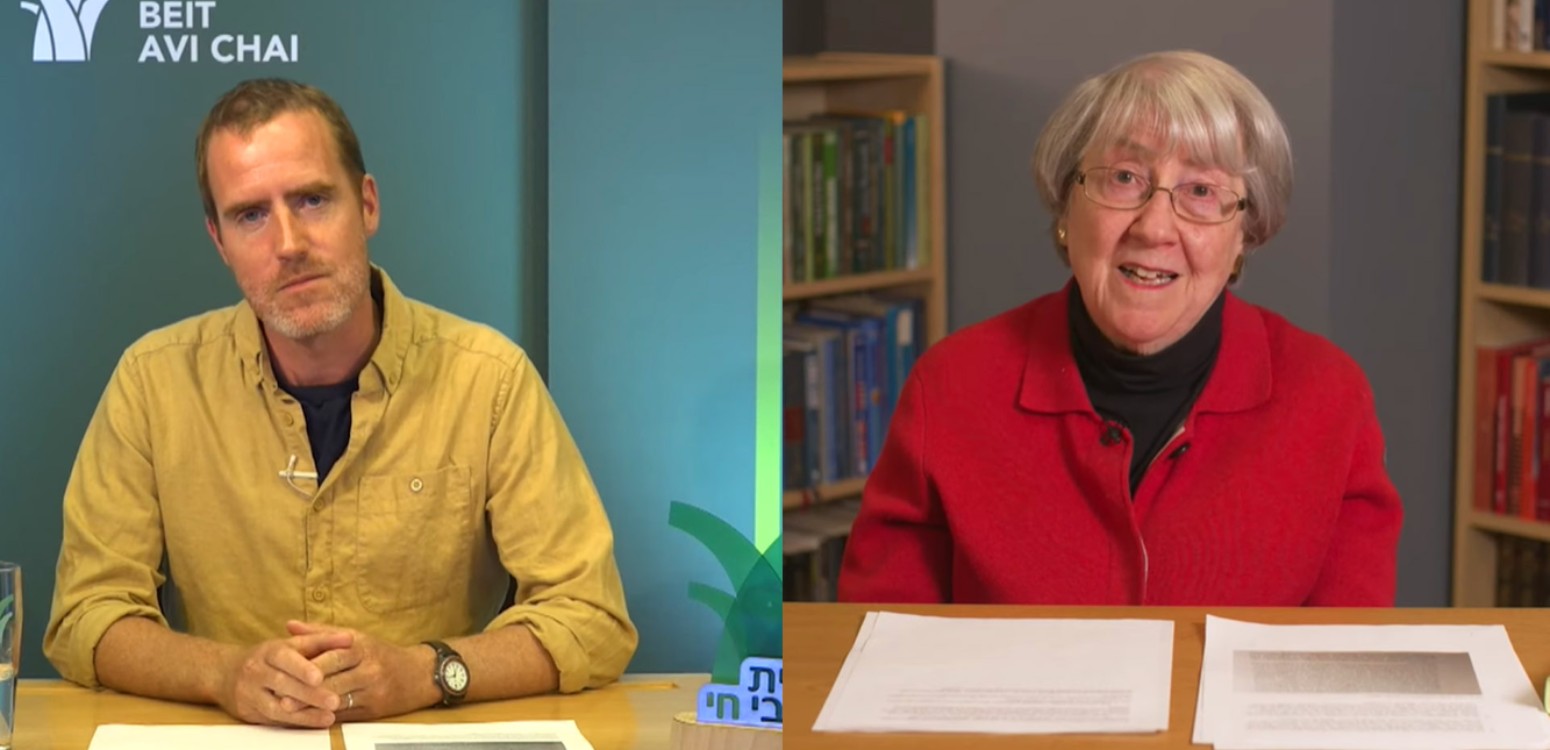
“I look at it as one series with a common theme,” says Prof. Daniel R. Schwartz, Herbst Family Professor Emeritus of Judaic Studies at the Hebrew University of Jerusalem, describing his four-part lecture series, “Conflicts in Ancient Judean Society: The Second Temple Period.” Were the people who participated in these conflicts “Judeans,” a people defined by their homeland, or “Jews,” a people defined by a shared religion? Schwartz has spent much of his career arguing that this dichotomy produced the rupture that resulted in the destruction of Jerusalem and the rise of the rabbis.
At the start of the Second Temple period, Judean identity was more stable, anchored in the return from Babylonian exile to a rebuilt Temple and homeland. Afterward, with the Temple destroyed and rabbinic Judaism dominant, the “Jew” had won out over the “Judean.” It’s the centuries in between that the series explores.
One word, two peoples
Schwartz explains what’s at stake with the Judean vs. Jew debate, which is the topic of the first part of the series. “The Greeks had one word and the Hebrew and Aramaic had another word,” he notes. The Greek word is Ioudaios (plural Ioudaioi), the Hebrew is Yehudi (plural Yehudim), and the Aramaic is Yehudai. All three are derived from the tribe/territory of Judah and, later, the province of Judea. In antiquity, this term covered both someone from the region and someone who followed Jewish practices and law, with its precise usage depending on the context. But in English, modern translators and scholars have a choice of “Judean,” which ties a person to the region of Judea, while “Jew” implies an affiliation with religion.
This split, Schwartz argues, produced two clashing visions of what it meant to belong to the people. The “Judean” camp oriented itself around the land, the state, and the Temple. The “Jewish” camp, by contrast, oriented itself around law and Torah, without undue concern for geography, since this group included many who lived far from Judea. This dichotomy is still under debate today. “In the last 20 or 25 years, it has become an issue,” Schwartz says, noting that some historians now argue in favor of dropping the word “Jews” from discussions of the Second Temple period altogether, reserving it for the post-Temple era when rabbinic Judaism, and eventually Christianity, crystallized. Schwartz’s book “Judeans and Jews: Four Faces of Dichotomy in Ancient Jewish History,” uses both terms, while highlighting the tension between them.
A king on trial
By the end of the second century BCE, this split had exploded into open warfare, which is addressed in the second session. “By this time, you can already see the religion vs state split,” Schwartz explains, noting the difference between the First and Second Books of Maccabees (which he has published commentaries on). The first was concerned with the Judean state, and the second with Judaism as practiced in the Diaspora. Within a few generations, this divide led to civil war, during which Josephus says that tens of thousands were killed.
For Schwartz, the single most vivid episode involves the Hasmonean king Alexander Yannai, who crucified hundreds of rebels who opposed him, reportedly while feasting with his concubines as he watched the rebels die. For decades, historians assumed Josephus had lifted this grim story from a hostile Greek source, possibly Nicholas of Damascus, a court historian and a friend of Herod. Then, in the 1950s, a text from the Dead Sea Scrolls mentioned a Judean king whose land was invaded by a Syrian king, who then crucified the rebels responsible. “Nobody could accuse the Qumran writer of following a Greek author from Damascus,” Schwartz says. This independent corroboration transformed a suspect myth into a documented atrocity and a case study in the fragility of Judean unity.
Rabbinic literature added its own layer, recounting how Yannai turned on the sages themselves. Schwartz treats that detail with some caution – the rabbis probably exaggerated, since several of the sages clearly survived, but the hostility toward Yannai by the rabbis is undeniable. Thus, we have three independent traditions, each with their own agenda, describing the descent into civil conflict. The war, Schwartz notes, weakened the Hasmonean state so much that it paved the way for the Roman conquest under Pompey a generation later.
“Give to Caesar what is Caesar’s, and to God what is God’s”
Once it arrived, Rome offered a familiar bargain. “You can have your religion if we can have the state,” is how Schwartz frames their offer, or, as Jesus says in the Gospels: “Give to Caesar what is Caesar’s, and to God what is God’s.” Some Judeans were willing to accept this deal. Others were not, and by the 60s CE a messianic fervor had convinced enough people that it was possible to defeat Rome.
Herod had tried to implement the Roman bargain decades earlier. “He was king and had no claim to religious authority,” Schwartz explains. He built Caesarea as a secular political capital and left Jerusalem to the priests while expanding the Temple into one of the most magnificent structures in the ancient world. Ironically, Schwartz argues, this backfired. A Temple so visibly grand made it harder, not easier, to accept that God lacked earthly power. When the revolt broke out in 66 CE, it was the young, hot-headed priests who first refused to offer the daily sacrifice on Rome’s behalf, despite the objections of many of the elders. “It wasn’t inevitable,” Schwartz emphasizes, “but it did go back to that distinction between Jew and Judean.” Notably, much of the rebels’ energy was directed inward before it was directed outward: against the high priesthood, the aristocracy, and the debt archives, which they burned to erase what was owed. This internal violence weakened Jerusalem’s ability to resist once Rome regained the upper hand.
After the Temple
When the Temple fell in 70 CE, the “Judean” vision of Jewish identity – rooted in land, lineage, and sacred space – lost its institutional home. The rabbis who reshaped Judaism in the shadow of its destruction rewrote the story, depicting the old priesthood as corrupt and self-serving. Schwartz frames the underlying dispute as a clash between two philosophies: the priests’ “realist” emphasis on physical lineage and sacred space and the rabbis’ “nominalist” focus on words and choices. This is why, in rabbinic Judaism, converts can become rabbis, synagogues can be built anywhere, and two of the tradition’s foundational texts – the Mishnah and the Talmud – took shape in the Galilee and in Babylonia, respectively.
Schwartz doesn’t think this was purely the result of the Temple’s destruction. “The seeds were laid beforehand and came to fruition afterward,” he says. His favorite illustration of this is Philo of Alexandria, writing while the Second Temple was at the height of its splendor. Even Philo, alarmed when the Temple came under threat, could still insist that the real Jerusalem existed in a person’s heart rather than wood and stone. For him, decades before Rome destroyed the physical building, that inward-looking, portable notion of sanctity was already “real Judaism.”
Asked how a historian should navigate sources as diverse as Josephus, Qumran, and the rabbis, Schwartz offers some professional advice. Every historian, he says, works from within their own present, and the questions scholars ask are inevitably shaped by their own era. At the same time, any reconstruction of the past should answer to the ancient evidence on its own terms and be read according to the rules by which sources are meant to be interpreted. “I’ve been doing that for fifty years,” he says, “reading sources in the original.” Whatever contemporary echoes listeners hear in these ancient tales, he hopes they’ll judge them by the standards of antiquity, and ideally come away wanting to open Josephus, or First Maccabees, for themselves.
Main Photo: Arch of Titus Menorah\ Wikipedia