Ani Ma’amin (“I Believe”)


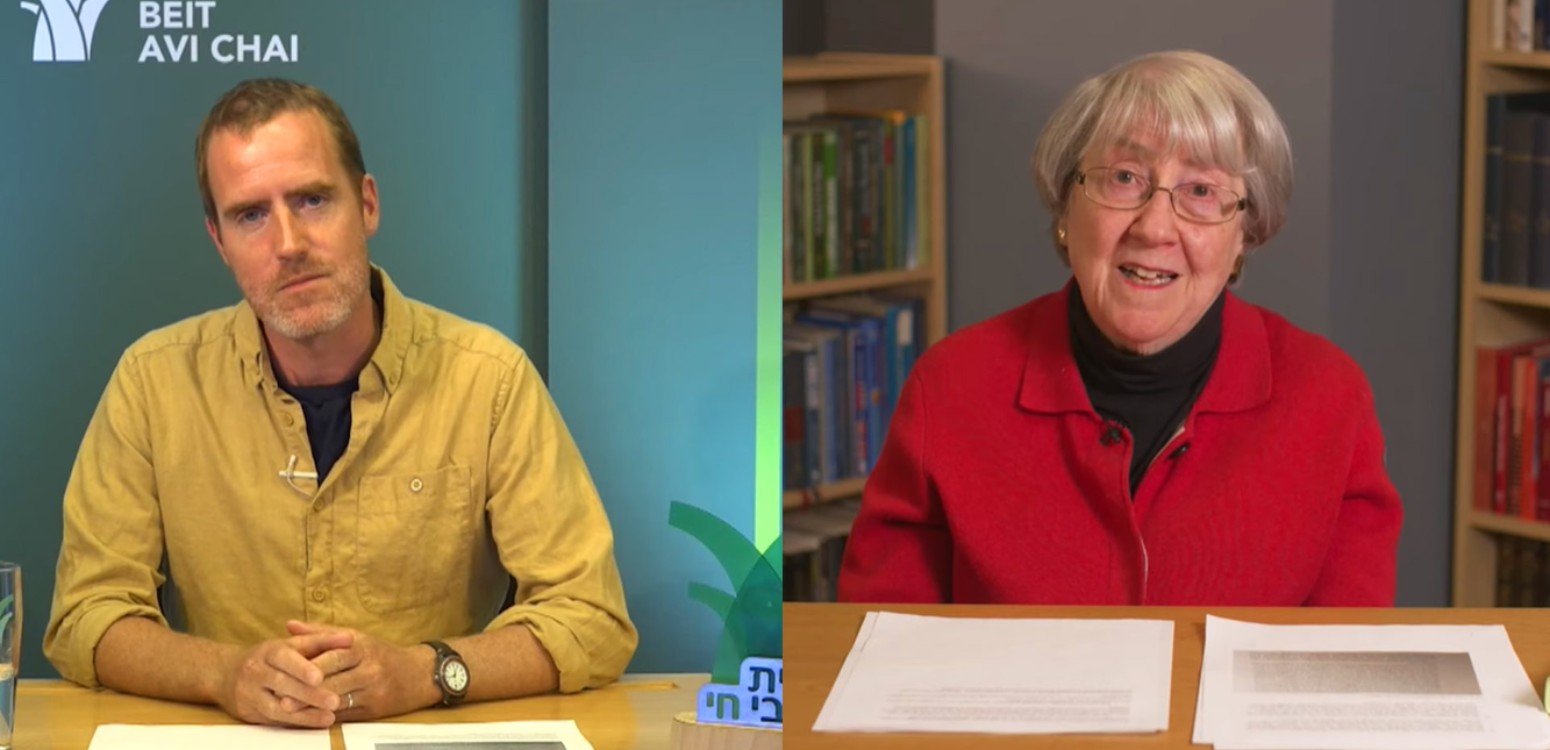
“There’s no better time to discuss S. Y. Agnon’s oeuvre than the High Holy Days,” says literary scholar Bilha Ben Eliyahu, who this holiday season leads a series of lectures at Beit Avi Chai dedicated to “A Guest for the Night”, the Nobel laureate’s semi-autobiographical magnum opus.
“Chagim, and especially Yom Kippur, carry a great deal of symbolic weight for Agnon,” says Ben Eliyahu. Thus – in the absence of a verifiable record – Shmuel Yosef Agnon (1887–1970) claimed to have been born on Tisha B’Av, and decided to make aliyah on Lag BaOmer. It is therefore no coincidence that “A Guest for the Night”, singled out by the Nobel committee as Agnon’s greatest literary achievement, begins with the following words: “On Erev Yom Kippur.”
Erev Yom Kippur is a day of anticipation. Every Jew knows instinctively that, although several days into the New Year, these are still days of retroactive repentance rather than a wholly new beginning. That crossroads is the essence of the High Holy Days in the Jewish calendar. It was also, in its own way, the crossroads facing the Jewish people in 1939, the year Agnon’s 80-chapter masterpiece was published – and the crossroads facing the author’s alter ego, 41-year-old Shmuel, who returns to his town of birth for the first time, decades after making aliyah.
A novel of return
“Homecoming is a major theme in Agnon’s work, ever since Vehaya Heakov Lemishor (“And the Crooked Shall Be Made Straight”), his debut novella,” says Ben Eliyahu. The theme remained just as strong in “A Guest for the Night”, which tells the story of Shmuel’s ten-month visit to his native Shibush – a name that is itself a metathesis (the Hebrew term for the switching of letters) of Buczacz, Agnon’s hometown in East Galicia, in what is now Ukraine. Shmuel leaves his wife and two children behind in the Holy Land, and the visit runs, fittingly, from Yom Kippur to Tisha B’Av. He goes home, or to a place he used to call home, only to find it foreign and desolate.
“Prof. Dan Laor (1944-2023), Agnon’s biographer, maintains that the biographical basis for the novel was his visit in 1930, in the wake of a work trip to Leipzig to supervise the publishing of the then-definitive collection of his works by the Schocken publishing company,” says Ben Eliyahu. “He had visited briefly in 1913, when his father was ill, but he hadn’t really lived there since 1908. The encounter with a radically different world, post-World War I, shocks him to the core. The town was ravaged by physical destruction, pogroms, economic hardship and emigration. The experience sent him on an introspective trajectory that culminated in the book.”
Homecoming on two levels
“The question that Agnon asks, effectively, is to what extent homecoming is realistic,” Ben Eliyahu says. But for Agnon, she adds, the notion of homecoming works on two levels simultaneously. “On the one hand, it’s a return in the same way that Odysseus returns to Ithaca from Troy in Homer’s “Odyssey”. It raises the age-old question whether one can return to a place that doesn’t really exist anymore. At the same time, homecoming is also a spiritual act, symbolizing teshuva – hence the centrality of Yom Kippur.”
It is quite clear that Agnon chose deliberately to start the story on that day, she adds, knowing it was strictly symbolic, since no Jew would travel on Erev Yom Kippur. “Erev chag for him was a state of mind: for a practicing Jew, emotionally, the holiday – any holiday – starts way before it actually does, at sunset. Many other things in life are like that too. Here again, as in many other instances in Agnon’s fiction, it is all about the protagonist’s failure to begin the holiday in the way they wanted to, to live up to the great expectation that it entails.”
Rethinking the past
Agnon often uses Yom Kippur as a potent launching pad for rethinking the past, and in that “A Guest for the Night” is no different. “The formative role that the Holy Day played in his childhood – epitomized in a short story published shortly before “A Guest for the Night” – is the ground zero of his identity. He said that as a child, on Yom Kippur, he felt what reverent awe was before he could articulate it. His memory was suffused with harmony – light, sweet smells, his father’s comforting presence – it was exaltation.”
All that followed in his life, particularly his return, was measured against that experience. The first few chapters of the novel, describing the community’s decay and demographic depletion, ought to be read in the shadow of that experience, says Ben Eliyahu. Agnon employs modernist devices, such as the stream of consciousness, to guide the reader through the protagonist’s oscillations between hope and despair, destruction and renewal, and familiarity and foreignness. All that, with the sweet memory of Yom Kippur serving as the point of departure, as well as that of uncertain return.
“Yom Kippur’s Ne’ila service says: ‘Open for us the gate at the time of closing the gate.’ This captures precisely the ambivalence with which Agnon sees his relationship with his former and current homes, and the possibility of bringing them together,” says Ben Eliyahu.
It’s a fitting image for a novel – and a season – built entirely on the tension between departure and return.
Main Photo: Chana Gitla Kowalska Shtetl 1934\ Wikipedia