Ani Ma’amin (“I Believe”)


While discussing laying siege to a city, Deuteronomy 20:19 asks, “When in your war against a city you have to besiege it a long time in order to capture it, you must not destroy its trees, wielding the ax against them. You may eat of them, but you must not cut them down. Are trees of the field human to withdraw before you into the besieged city?” Most commentators have understood this as a rhetorical question, a way of separating the fate of a tree from that of a human being (although some, for example Ibn Ezra, prefer to read it as a statement). Over the centuries, though, the verse became ki ha’adam etz ha’sadeh – “for man is a tree of the field,” with people and trees now viewed in the same way.
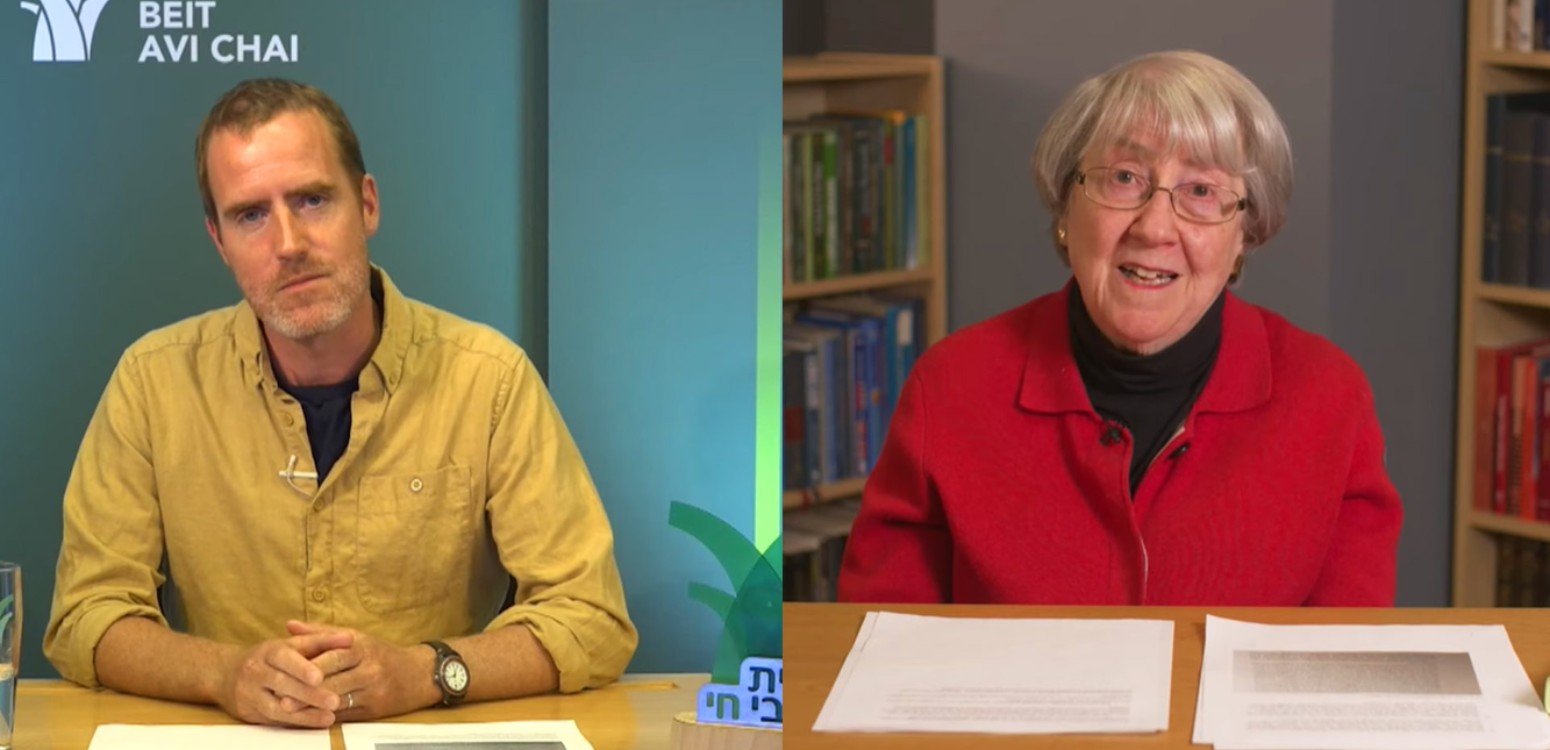
This small act of wishful rereading provides Dr. Itay Marienberg-Milikowsky with the title for his lecture series at Beit Avi Chai. He is a senior lecturer in Hebrew literature at Ben-Gurion University of the Negev, founder of the BGU Literary Lab, and co-head of the university’s Environmental Humanities Center. For the last few years, he has been asking what happens when you read the Talmud through an ecological lens. “It’s a headline,” he says of the ambiguity built into the title. “The verse creates something very interesting. The Torah asks a rhetorical question: What’s the relationship between harming trees and harming people?” The biblical law of warfare draws a sharp line between the agency of humans and the passivity of nature, while this phrase blurs that distinction. “This will be the point of departure,” Marienberg-Milikowsky says.
An unlikely fit
At first glance, ecocriticism is not a natural fit for rabbinic literature. The field emerged in the 1990s out of a sense that mainstream literary criticism had neglected environmental questions, the way, a generation earlier, feminist criticism had shown literary scholarship neglected questions of gender. Marienberg-Milikowsky sees a direct lineage between the two: both started as accusations of neglect, and both eventually found their way into Jewish studies. For Marienberg-Milikowsky, an ecological reading can mean turning to stories that are explicitly about nature: animals, plants, land, agricultural law. But it can also mean something more ambitious: applying an ecological sensitivity to texts where nature is barely present at all. “It’s interesting to offer an ecological reading in unexpected places, even when nature isn’t necessarily mentioned,” he says. “Both approaches are important.”
The objection to this is that rabbinic literature is human-centered. Its concerns are legal; its categories are drawn from human obligations, and its authors lived and wrote centuries before anyone had the conceptual tools to grasp the scale of humanity’s environmental impact. Why look here, of all places, for ecological insights? Marienberg-Milikowsky doesn’t dispute the premise. “Almost all literature is like this, with some experimental exceptions.” In other words, anthropocentrism isn’t a flaw specific to the rabbis but a structural feature of storytelling itself. Still, “you can be extremely anthropocentric or less so.” And halacha, precisely because of its ambition to address every area of life, also covers the environment: agricultural law, waste, resource use, the treatment of animals.
Do not destroy
He offers the example of bal tashchit – “do not destroy” – the biblical prohibition, rooted in that same verse from Deuteronomy 20, against wasteful destruction. But the material he finds in the Talmud won’t please anyone hoping to find an environmental ethic: the biblical principle – originally a protection extended to fruit trees in wartime – is narrowed by the rabbis first into a rule about protecting human property, and finally into permission to destroy resources for the sake of bodily comfort. This shows that rabbinic texts aren’t simple repositories of ancient wisdom waiting to be applied to modern crises, and that they sometimes run counter to contemporary thinking on these issues.
Another example offered by Marienberg-Milikowsky is one of the Talmud’s most famous and strangest stories. In Bava Metzia (the second of the first three Talmudic tractates in the order of Nezikin, “Damages”) 85a, Rabbi Judah HaNasi, redactor of the Mishnah, meets a calf being led to the slaughter. Weeping, it hides its head under the rabbi’s cloak, only for Rabbi Judah to say, “Go, for this you were created.” According to the story, for this bluntness, Rabbi Judah was subsequently punished with 13 years of terrible pain until an act of compassion toward a litter of weasels earned him relief. “It’s not a story about vegetarianism,” Marienberg-Milikowsky notes, “but there are things you just don’t say.” It’s a story about the limits of permissible speech – about what you don’t say, even to a creature destined for slaughter.
Tearing cloth, healing flesh
A less obvious example comes from the laws of mourning (Bava Kamma 91b). The rabbis were uncomfortable with the ritual tearing of garments because of bal tashchit concerns about needless destruction. To illustrate this point, the text describes how Rav Hisda hiked up his robe rather than snagging it on thorns, to demonstrate that flesh heals but a torn garment doesn’t. While neither of these texts is explicitly ecological, they both reveal an unexpected tension between human beings and nature. Ecocriticism, Marienberg-Milikowsky notes, came to Jewish studies later than many other fields. But the climate crisis, he says, has changed how we read this material, not because ancient texts can solve problems their authors never anticipated, but because they can increase people’s awareness. “Even if we won’t change our behavior tomorrow, we have a greater awareness,” he says. This awareness, he notes, has a cultural dimension as well. “If we find in our ancient texts different approaches to our relationship with nature, then we can also use them in practice.”
What comes next
This, more than any specific ruling or story, is what he hopes the series will provide: not a set of answers, but a reminder that the questions are older and stranger than they might seem – and an original angle on a vital contemporary issue. As for where his research goes next, Marienberg-Milikowsky is now looking toward texts where the ecological angle is far less apparent – stories that, read closely enough, might reveal something new about what the tradition imagined a human being to be. A book-length study, he says, may follow. For now, the project remains what it has been from the start: an attempt to bring an ancient angle to a vital modern question.
Main Photo: AI