Ani Ma’amin (“I Believe”)


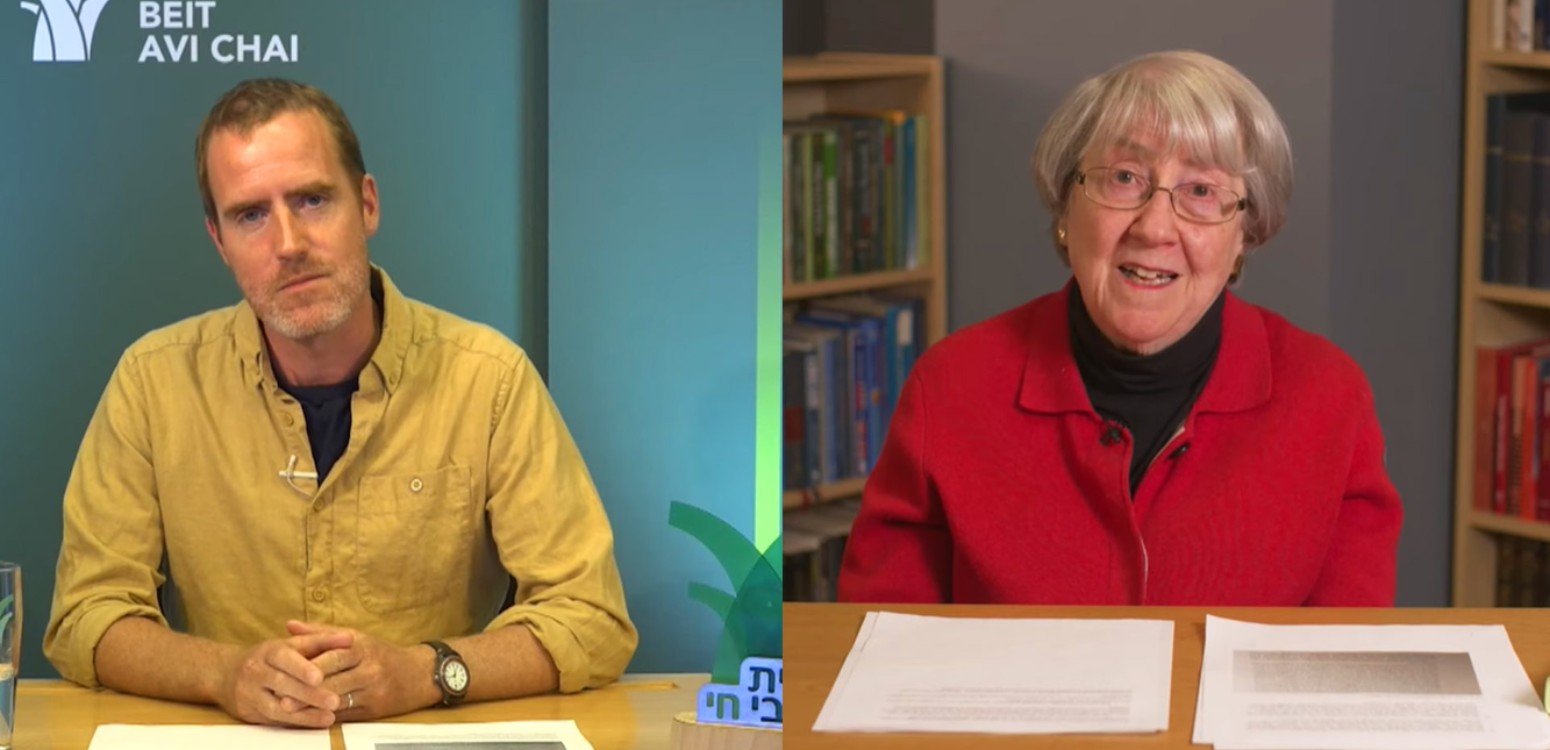
Something has been building up in Yossi Turner for years. Long before October 7, the professor of Jewish Thought and Philosophy (Emeritus) at The Schechter Institutes in Jerusalem had been feeling what he describes as a deep unease – a sense of being between two extremes, caught between despair at the fractures in the Israeli and global society on the one hand and the imperative to find a path forward on the other. The political polarization, the fraying of civic bonds, the feeling that historical processes were running beyond anyone’s control: all of this had been accumulating. Then came October 7, and the question of hope and despair took on a different, more urgent dimension.
Catastrophe and recovery
The result is Turner’s three-part lecture series at Beit Avi Chai: “Despair, Hope and the Sources of Judaism.” His premise is that the Jewish textual tradition – from the Midrash to post-Holocaust philosophy, from the Book of Job to A.D. Gordon – is filled with wisdom about catastrophe and recovery that we urgently need but have largely stopped consulting. “Looking at old sources of wisdom,” he says, “makes for a much deeper and healthier culture. These sources allow us to observe events from different vantage points.”
The phrase Turner uses to describe this is “wisdom of the future.” According to this perspective, genuine resilience is not merely endurance but a form of vision, the capacity to look beyond the immediate crisis towards something new. “The kind of problems we face run so deep,” he says, “that I don’t think there’s really a way of working through them without imagining some kind of vision of the future.” Developing such a vision is itself difficult, he acknowledges. But the tradition, he argues, has dealt with this before.
The Mishnah deals with divine retribution in terms of measure for measure – specific calamities assigned to specific transgressions. To modern ears, this can sound like victim-blaming, but Turner views it differently. “In the Mishnah they were discussing the destruction of the First Temple and the Babylonian Exile,” he explains. They were trying to account for a catastrophe that had already happened, to find some framework – however painful – within which it could be explained.
Another relevant Talmudic story concerns the execution of Rabbi Shimon ben Gamliel by the Romans. As he is about to be executed, Rabbi Shimon asks Rabbi Yishmael why he must die. The answer: he may once have kept a petitioner waiting while drinking, dressing, or during a private moment. The punishment is wildly disproportionate to the offense. And yet, Turner notes, Rabbi Shimon found consolation in the explanation – because having a reason, however unjust, was better than having no reason at all.
How tradition manages evil
Turner also mentions modern writing, including Elie Wiesel’s (1928–2016) story about a visit to a shtiebel in Nazi-occupied Europe. Don’t pray too loudly, he warns the congregants, because maybe God will hear them and will know there are still some Jews left in Europe. Turner is drawn to this story precisely because of what it does not do. It does not resolve the problem of faith under the Holocaust. It does not explain it, justify it, or transcend it. It simply holds the tension, using the traditional language of prayer and presence while hollowing that language of its usual reassurances.
To navigate these texts philosophically, Turner draws on two modern thinkers: Eliezer Schweid (1929–2022) and Emil Fackenheim (1917-2003). What interests Turner is not their answers to the problem of evil, but their analysis of how the tradition manages it. Fackenheim, he explains, examines the “devices” that classical Jewish thought uses when moral and ethical challenges to faith arise – what it means to acknowledge the challenge genuinely while still finding a way to revise and sustain belief rather than abandon it altogether. “My interest,” Turner says, “is not knowing what their explanation is for the problem of evil. It’s more how they deal with it.”
Zionism and the dialectic of despair
Moving from theology and philosophy to political thought, Turner argues that despair is not what Zionism overcame but what produced it, using a rereading of the classic Zionist thinkers Ahad Ha’am (1856–1927) and A.D. Gordon (1856–1922), to make his case. Ahad Ha’am’s very first essay, “This is Not the Way,” Turner notes, makes a striking move: it brings down the hope that had previously been anchored in the heavens and relocates it to earth, transforming divine promise into national self-belief, with the source of hope shifting from God to the Jewish people themselves. With Herzl, hope became the organizing concept of a political program – the title, the slogan, the vision. But it is Ahad Ha’am and Gordon, in Turner’s reading, who grasp the dialectical relationship between hope and despair most clearly. “Gordon demonstrated the constructive power of despair by producing hope,” he says. The early pioneers of the Second Aliyah – encountering genuine life-and-death questions every day, building something in the face of conditions that might rationally have precluded it – exemplified this dialectic by their very persistence.
There is a religious substrate beneath this secular translation, Turner argues. Ahad Ha’am observed that throughout Jewish history people turned to prophets precisely in times of deepest despair: it was the extremity of the situation that generated the prophetic vision of hope. “Zionism translated this into secular terms,” Turner says, pointing to Ezekiel’s vision of the valley of dry bones as an image that the Zionist movement was consciously or unconsciously reworking – a national resurrection born from the depths of national destruction.
Modern national catastrophes
Finally, Turner addresses the question of how to commemorate unprecedented modern suffering – specifically the Holocaust and October 7 – when we lack the liturgical tools that traditional Jewish mourning provides. Tisha B’Av, with its layered rituals of fasting, lamentation, and textual reading, evolved over centuries, while the calendar of modern national catastrophe is still being written.
To address this question, Turner turns to Viktor Frankl’s “Man’s Search for Meaning,” not as a departure from the religious tradition but as a bridge to it. Frankl’s central insight – that the capacity to find meaning is itself a survival tool – resonates with the logic of texts like Psalms and Lamentations. The challenge, however, is that those canonical texts carry a theological weight that no longer sits easily with modern experience. Psalms and Lamentations both operate within a framework of divine justice – we suffered because we sinned. “You can't say something like that about the Holocaust and October 7,” Turner says.
This is why Turner turns instead to the Book of Job. Job is the great biblical text that refuses the consolation of divine justice, that insists on the innocence of the sufferer and demands an accounting from God rather than from the victim. It is, Turner suggests, a better liturgical companion for Yom HaShoah than texts that presuppose a theology of punishment. Yet even Job doesn’t fully resolve the problem. “This is uncharted territory,” Turner acknowledges – a place where, he says with something close to hope, “the Jewish spirit can become creative again.”
Looking for intuition
The single thread running through the series is that working through despair requires more than analysis of the present. “The question of hope in general is first and foremost dependent on the inner attitude and type of faith that we can develop within us,” Turner says. “We concentrate so much on external explanations of what’s going on but we neglect to realize how much the onus of working things through is put upon us.” Three thousand years of Jewish texts, Turner believes, have something to teach us about this. Not answers – he is careful not to promise those – but what he calls “intuition”: a sense of what it is we ought to be looking for, and the beginnings of a vision we can be motivated to work towards. At a time when that intuition feels harder than ever to locate, this is an invitation to look for it where, perhaps, it has always been.
Main Photo: ChatGPT