Ani Ma’amin (“I Believe”)


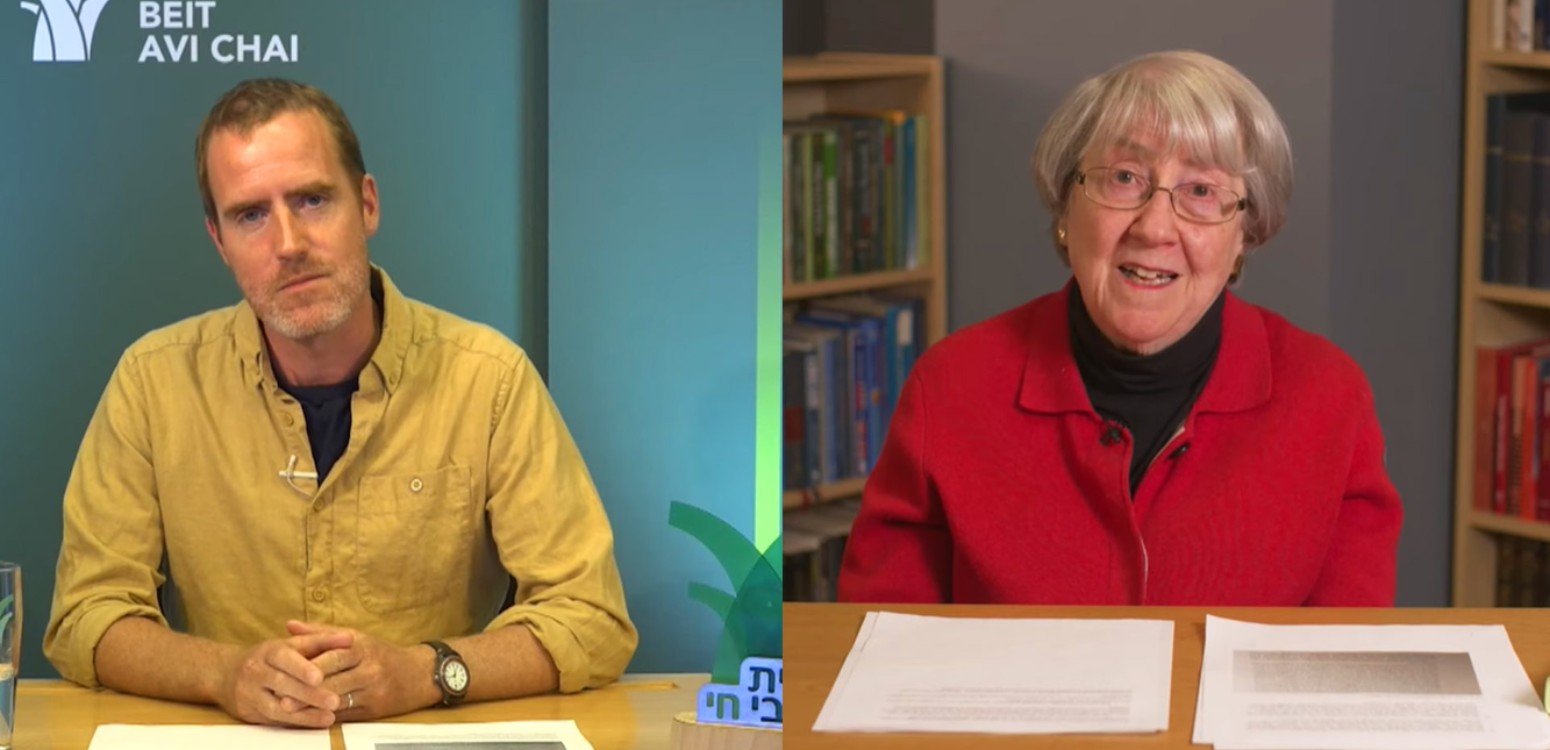
“What you’re looking at is a continuous Jewish presence from the Medieval period," says Dr. Katherine Aron-Beller FRHistS, an expert in Jewish history, whose English-language series "The Jews of Hungary: Tradition and Conflict" will open at Beit Avi Chai next month. “Whereas in many other places, you get the feeling that the Jewish presence stops, as in 1492 in Spain or 1290 in England, in Hungary you have a four-year gap between 1360-1364, when the Jews were expelled from Hungary, but that’s it.”
The series was borne out of a trip to Hungary that Dr Aron-Beller FRHistS, a lecturer in Jewish History at Tel Aviv University and the Hebrew University of Jerusalem, led as a guide. After guiding many trips to several destinations with Jewish history – from Sicily and the Greek Islands to England and Alsace – she went to Hungary for the first time with a group, and was sorry she had not done it earlier. The series, she says, is meant to introduce potential travelers to the richness of Hungary’s Jewish history, and persuade them to plan their trips through the Jewish lens. “I want to provide information to people who are going on their own trips. I think these sites are so important to be seen.”
A microcosm of Europe’s treatment of its Jews
Throughout history, Hungary was a microcosm of Europe’s treatment of its Jews. The emancipation of French Jews in the XIX century sets an example for other countries, including Hungary under the Habsburg Empire and since 1849 as an autonomous country. After becoming full-fledged citizens, the experience of Hungarian Jews became very similar to that of German Jews, who perfectly integrated professionally and culturally. “As a historian,” Dr Aron-Beller says, “my effort then goes into thinking about the following: how do I compare it to other places? What are the Jews asking for? How are they being treated? What is the level of antisemitism at the time?”
Bourgeois integration and Hasidic vitality
One aspect where Hungarian Jewry does stand out is its being equally auspicious to European-style bourgeois integration and to a rich and vibrant Hasidic culture. On the one hand, “you have these intellectual people who compromised their religious identity by having organs in their synagogues because it means they are more in tune with what’s going on in the local churches, or contemplating changing the day of Shabbat to Sunday to fit in with the day that is religiously celebrated by others, and on the other you have the countryside, where you have a large section of Jews who became more and more attached to Hasidic rabbis.”
Most of the communities were destroyed in the Holocaust, though many of them have since been rebuilt and Hungary is now boasting a dynamic Hasidic life. In these places visitors can explore the Jewish past as well as the Jewish present, especially the strong folkloric connections that people had to the Hassidic leaders.
For instance, Dr. Aron-Beller FRHistS mentions Rabbi Moshe Teitelbaum (1759-1841) of Satoraljaujhely, known as “the amuletic rabbi.” He would provide people with amulets to hang in their rooms to protect them, especially mothers after childbirth “but it wasn’t just Jews,” she says. “There were also peasants and local populations who heard that these rabbis had special powers, and went to see them.”
Seeing the sites
In this four-part series, Dr. Aron-Beller FRHistS seeks to convey the experience of visiting these places as vividly as possible. “Because I’ve been to the sites myself,” she says, “I bring a lot of visual material. So that would mean going to see all the extant synagogues, and when you go to see synagogues in Hungary you have to ask yourself whether they are Neolog, Status-quo or Orthodox (or maybe Hasidic). Knowing something about the history, I believe, means that when you go to see the sites, they suddenly come alive. I’m interested in providing the viewer with a visual understanding of what they would see if they went to these sites.”
One thing not to overlook is the incredible graffiti in the Buda synagogue, which is believed to be from the XV-XVI century. The graffiti, a writing on the inside wall of the synagogue that contains a quote from the Book of Samuel, “was designed to give the worshippers an amuletic power of prayer,” she says. It was not an uncommon Jewish ritual – in the Synagogue in Cordoba, Spain, the whole Book of Psalms is written on the wall – and offers a powerful glimpse into religious worship, and the use of visual and literary devices to enhance the experience.
Hungary's unique antisemitism
Also with respect to the Second World War, Hungary is unique. “Hungary has its own trajectory of antisemitism,” Dr Aron-Beller says. It was very influenced by Hitler’s antisemitism, and Hungarian Jews, just like German Jews, could not accept that what they felt they had contributed to so much would turn against them, and their rabbis endorsed that view. They told them to sit it out. “It was bad but it wasn’t as bad as it would become after the Nazi invasion, when Jews began to be deported to the camps,” Dr Aron-Beller explains. But because it was in 1944, at a rather late stage in the war when German-occupied territories were under attack from outside, it wasn’t so easy for the Germans to liquidate the ghettos, so they started with the provincial ones and worked their way into the capital. “What you have is the Budapest ghetto really lasting to the end,” Dr Aron-Beller says. “And it’s not the Nazis who liquidate the ghetto, it’s the Arrow Cross [the pro-Nazi party].” There was lethal, Nazi-type antisemitism coming from Hungarian circles, and the country, including its Jews, have had to live with this heritage ever since.
Main Photo: The Great Synagogue of Budapest on Dohány Street, built in 1859\ OsvátA at Hungarian Wikipedia