OldContentID: 0
OldRefID: 0
Why do we fast on the Ninth of Av? What really happened during the Temple’s destruction? And what can ancient history teach us about modern unity? Ten essential facts about this day of mourning, from the siege of Jerusalem to the enduring power of baseless hatred
- The First Temple was burned by Nebuchadnezzar, King of Babylon, in 586 BCE, while the Second Temple was destroyed by the Romans in 70 CE. About 60 years later, the Jewish community in Judea was completely destroyed following the Bar Kokhba revolt, and it was then that the long exile of the Jewish people actually began.
- According to tradition, both Temples were destroyed on exactly the same date: the 9 of Av. This date has very loaded and complex significance, which is why the 9 of Av (Tisha B’Av in Hebrew) became a day of fasting and remembrance.
- The destruction of the Second Temple was not just a historical event, but a formative event in Jewish history. To this day, many Jews in Israel and around the world yearn for the rebuilding of the Temple, and for good reason: immediately after the destruction of the Temple, Jerusalem ceased to be the spiritual center of the nation’s life, the people of Israel went into exile, and since then have experienced countless difficult, challenging, and painful transformations. And on the other hand, also consolidating ones.
- Forty years before the destruction of the Second Temple, the people of Israel received various signs of their deteriorating spiritual state. The doors of the sanctuary would open by themselves; the western lamp did not burn for 24 hours as before; on Yom Kippur the wool dyed red, called “tongue of crimson,” would not turn white as a sign of God’s forgiveness of the people’s sins, but would actually turn redder; and on Yom Kippur the scapegoat that was chosen by lot was the one on the left, not the one on the right – another sign that God was not particularly pleased with His people’s spiritual state.
- When Titus Caesar Vespasianus (39 AD–81 AD) returned to Rome, he decided to organize a spectacular victory parade to boast of his triumph. For that parade, 700 tall and robust Jewish youths were chosen, who were supposed to serve as living display of the great military achievement. They were chained in iron shackles and humiliated. As a memorial to that victory, the Arch of Titus was erected, with a relief showing the parade, including the defeated and humiliated captives carrying the Temple vessels with them.
- When exactly was the Temple destroyed? On this too there are several opinions. According to the Book of Kings II, the destruction occurred on the 7 of Av, but according to the Book of Jeremiah, the disaster occurred on the 10 of Av. The Sages addressed this contradiction in the Babylonian Talmud and explained it thus: on the seventh, foreigners entered the Temple and ate and desecrated in it. And on the 9 of Av, close to nightfall – they set the Temple on fire, which burned throughout the entire day. Therefore, the fast was set for the 9 of Av, although Rabbi Yochanan (180–279 CE), would have been right to set the fast specifically on the tenth of Av, since most of the sanctuary burned on this day, but the Sages set the day of mourning based on the beginning of the event.
- According to Flavius Josephus (born Yosef ben Mattityahu, c. AD 37–c. 100), Titus specifically ordered not to destroy the Temple, mainly because of the custom at the time to leave important buildings as living testimony to the conquest, but one of Titus’s soldiers threw a torch toward the Temple in the heat of battle. Titus himself (according to Josephus, as mentioned) tried to extinguish the fire, but didn’t really succeed. According to other sources, Josephus tried in his words to cover up for the Roman commander, but in reality, Titus was the one who explicitly ordered the destruction of the Temple.
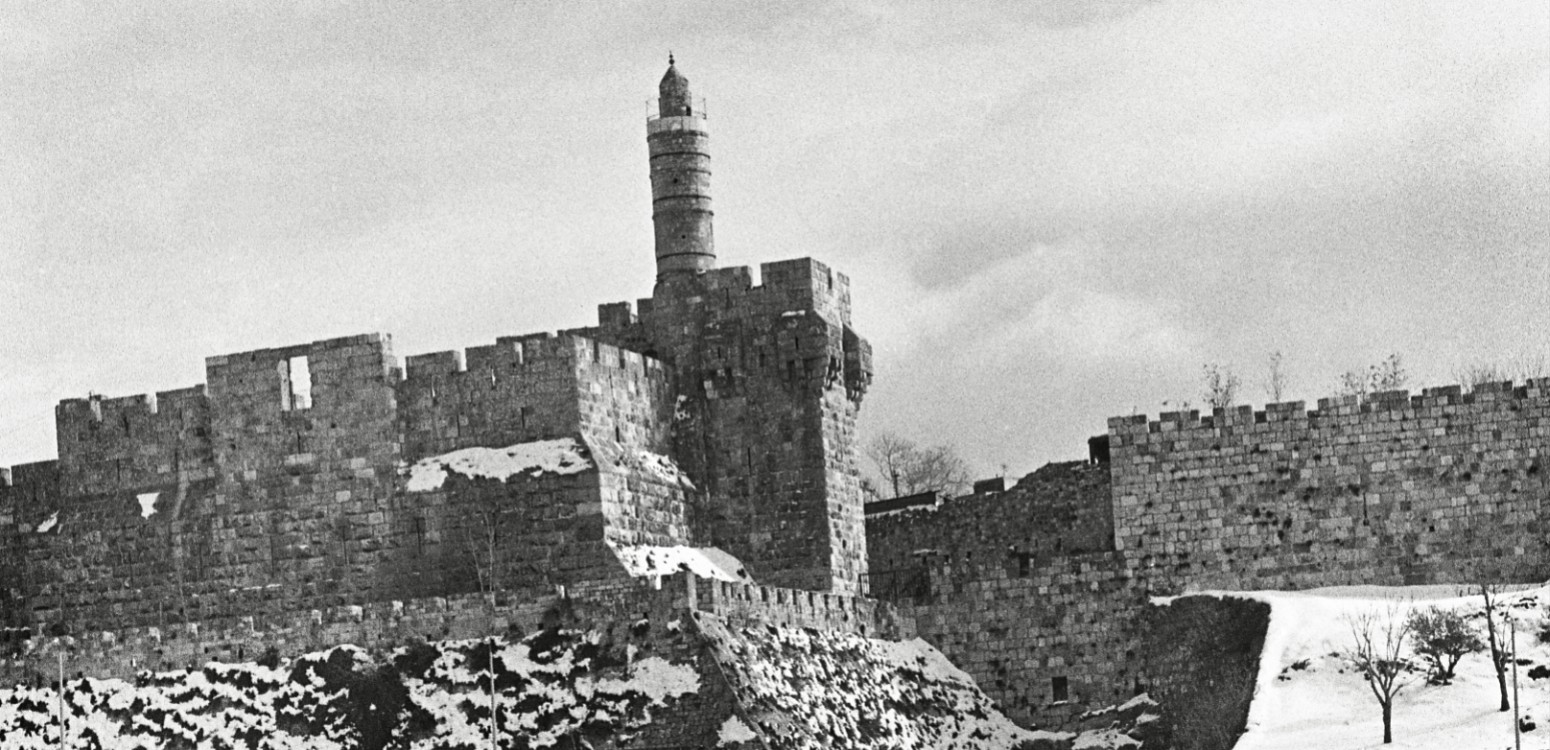
- Titus burned the Temple, but left three towers to show future generations how fortified and strong the city he conquered was – the Tower of Hippicus, the Tower of Mariamne, and the Tower of Phasael. But except for those towers, which remained in their glory, Jerusalem became a heap of ruins. The rebellion leaders Shimon Bar Giora (died 71 CE) was executed within a short time and Yochanan of Gush Halav (also known as John of Gischala) was sent to life imprisonment.
- How was the war conducted at the time? Titus destroyed Jerusalem using ballistae – a type of primitive cannon that fired a barrage of stones, iron, and fire. Due to the siege, the city’s defenders were weak and exhausted and could not provide adequate defensive response. Despite their weakness, it took Titus two difficult months of war to breach the walls of Jerusalem.
- The First Temple was destroyed because of three main things: idolatry, sexual immorality, and bloodshed. Despite these serious sins, it was rebuilt after 70 years. The Second Temple was destroyed because of baseless hatred, and to this day, it has not been rebuilt, teaching us that baseless hatred is serious and worse than even the three serious transgressions mentioned above. Food for thought.
This article was originally published in Hebrew.
Main Photo:Destruction of the Jerusalem Temple\ Wikipedia
Model.Data.ShopItem : 0
12