Ani Ma’amin (“I Believe”)


It is well known that on Shabbat religious Jews do not drive or watch television, cook food or use electric appliances. Less well known is that certain objects – a pen, a phone, a hammer – become not merely unused but unmoveable. The name for this category of items is muktzeh. Where did this concept come from and how did it become so central to the experience of Shabbat?
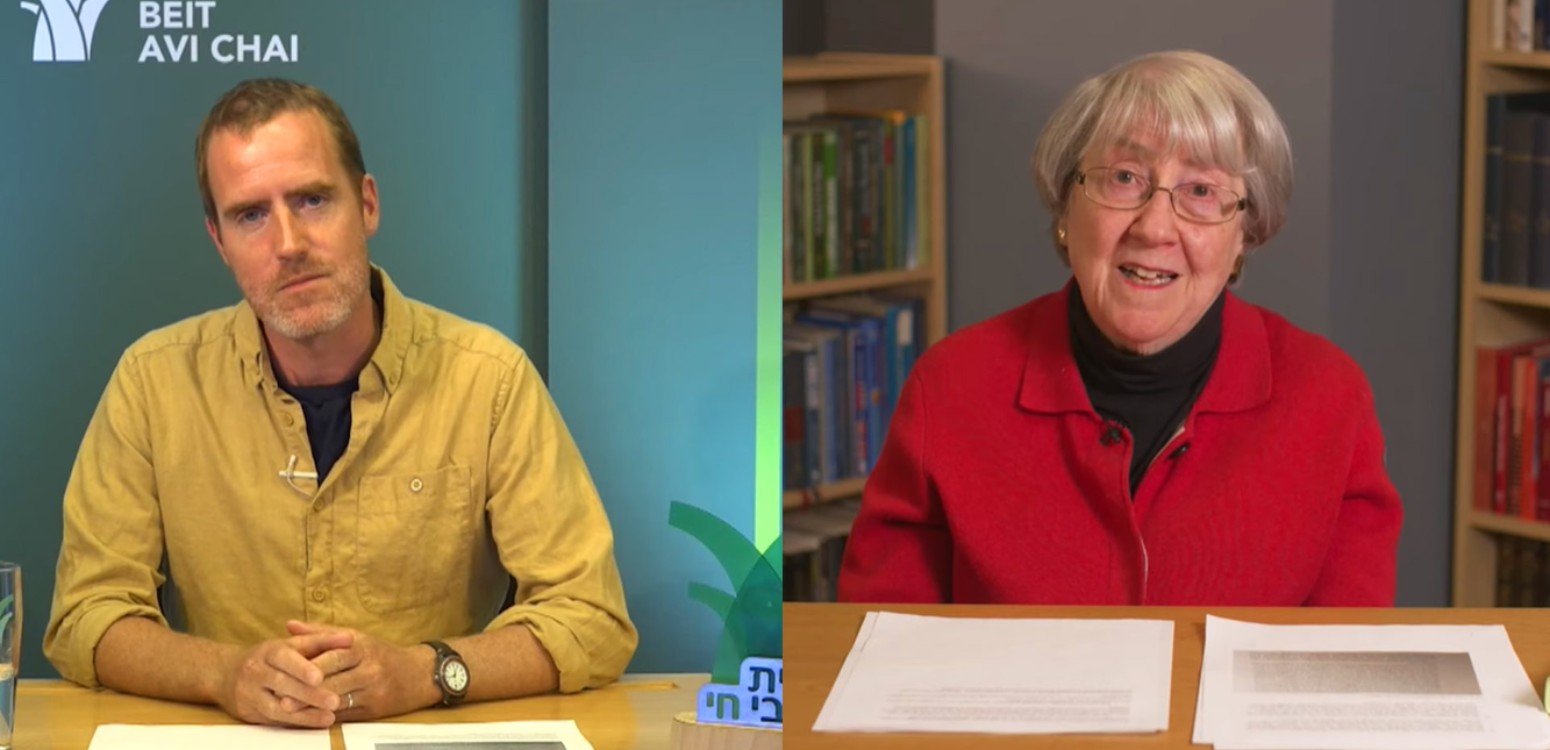
Dr. Yoel Kretzmer-Raziel, an educator and lecturer at Achva Academic College, has spent years studying the history of this overlooked part of Jewish law. His new series at Beit Avi Chai, “Muktzeh: The Shaping of the Prohibitions on Handling and Consumption on Shabbat in Rabbinic Literature,” traces the concept of muktzeh from its beginnings in the Bible through the Second Temple period, across the Tannaitic literature of the Mishnah, and into the debates of the Talmudic Amoraim.
The starting point was a moment of confusion. “Many years ago, I studied Masechet Shabbat with my wife,” Kretzmer-Raziel recalls. “As we were learning the third chapter, I found the issues of muktzeh very intriguing, and I realized there were aspects I wasn’t aware of.” What surprised him was not the laws themselves but their strange conceptual incoherence. The Tannaitic sources – the rabbinic literature of the first and second centuries CE – contain a variety of prohibitions on handling vessels or consuming goods on Shabbat and festivals. “But they don’t see it as one halachic field,” he explains. “They’re not altogether disconnected, but the underlying logic is not articulated.” It was this incoherence, and the Talmud’s attempts to resolve it, that inspired his research.
Getting ready for Shabbat
The story begins in the wilderness of Sinai. In the account of the manna in Exodus, the Israelites are instructed to collect their portion and prepare it before Shabbat. Kretzmer-Raziel argues that the Tannaim – and possibly their Second Temple predecessors – read this not merely as a positive instruction but also as a negative one: everything intended for use on Shabbat must be prepared beforehand. Long before the concept had a name, the idea that Shabbat required a certain readying of the world was already embedded in the earliest rabbinic reading of the Torah.
But the story did not begin with the rabbis. Kretzmer-Raziel takes us back further still, to the sectarian literature discovered among the Dead Sea Scrolls. The Damascus Document, a text from the first or second century BCE, offers an interesting example of both the similarity and difference between early Jewish law and what would later become the rabbinic tradition. It describes a scenario familiar from later discussions: a person who falls into a pit on Shabbat. The Damascus Document’s ruling is stark – one may not use a ladder, a rope, or a bucket to rescue them. What is conspicuously absent from this ruling is any mention of pikuach nefesh – the preservation of life, which in rabbinic law overrides almost any other consideration. The Damascus Document, Kretzmer-Raziel notes, offers something recognizable to a later observer, while operating within an entirely different set of priorities.
39 categories of prohibited labor
By the time of the Mishnah, the landscape had changed substantially. Large portions of tractates Shabbat and Beitza – the latter devoted to the laws of holidays – are dedicated to questions of handling and consumption that would eventually fall under the rubric of muktzeh. Yet the Tannaim themselves, characteristically, offer little in the way of conceptual explanation. They do not tell us where these laws come from. They do not connect them to biblical verses in the manner they do with the Shabbat melakhot (the 39 categories of prohibited labor). “Even their innovations are not usually advertised as such,” Kretzmer-Raziel observes. The concept exists, the cases accumulate, but the unifying framework remains unclear.
It would fall to the Amoraim – the rabbinic authorities of the Talmud period, working across several centuries in both the Land of Israel and Babylonia – to take this disparate body of law and attempt to make sense of it. “The Amoraim find the Tannaitic sources in disarray and try to harmonize them,” Kretzmer-Raziel explains. Their most striking strategy, in the Babylonian Talmud, is what he describes as an anachronistic construction: the invention of a dispute between Rabbi Shimon and Rabbi Yehuda. This dispute does not appear as such in the Mishnah. Yet the Bavli retroactively reads the entire Tannaitic literature on muktzeh through this lens – organizing the sources into two camps, one that has the concept of muktzeh and one that does not, with a range of intermediate positions built in between. The result is a kind of narrative arc: some thirty discussions in the Bavli are organized around this dispute, and Masechet Shabbat, Kretzmer-Raziel notes, concludes on its very last page with a resolution of the debate. One can read the tractate, he suggests, as a sustained story about this single concept.
The Amoraic period also introduces a significant shift in the underlying logic of muktzeh. The Tannaitic sources, Kretzmer-Raziel argues, tend to focus on the physical status of the object at the start of Shabbat: Is it ready? Is it prepared? Is it in the right condition? The Amoraim introduce a different question: What is the person’s mental relationship to the object? This turn toward the subjective intention of the Shabbat observer rather than the objective state of the item marks a significant development in the conceptual history of muktzeh. And it may explain, at least in part, the word itself.
The etymology of muktzeh
The etymology of muktzeh is not straightforward but may derive from the area behind a house where figs were spread out to dry.
The question that animated the law was this: when Shabbat began, what was the status of those figs? Were they ready for use, or were they still in the process of becoming something else? From a question about figs, the category expands outward to encompass the full range of objects and substances that occupy a different conceptual space on Shabbat than during the rest of the week.
This expansion, Kretzmer-Raziel notes, draws significantly from the vocabulary of Tannaitic purity law. The laws of muktzeh borrow concepts and idioms from the complex framework of ritual impurity and purity that governed so much of Second Temple life. This borrowing gives muktzeh something of purity law’s special texture: the sense that certain objects carry a kind of charge, that contact with them is transgressive. “Muktzeh gives one a feeling that I’m doing something that is almost frightening,” he observes. There is a significant difference, he points out, between saying that an action is forbidden and saying that an object is muktzeh. The latter suggests not just a prohibition but a different status – something that belongs, for now, to another world.
This helps explain why muktzeh came to occupy such a prominent place in the consciousness of Shabbat observers, even though at first glance it might seem to be a lesser concern than the melachot. The 39 prohibited labors are, after all, more dramatic: you cannot plough, build, or light a fire. Why should moving a hammer matter so much? “Melachot are more obvious,” Kretzmer-Raziel explains. Most of the prohibited labors involve creative or constructive actions that one would not naturally undertake on Shabbat. Muktzeh operates in a greyer zone – moving something from one place to another seems, on the face of it, to be a minor act. Precisely because the prohibition is less intuitive, it requires stronger reinforcement. “The law compels you to physically reorder the house,” Kretzmer-Raziel says. “It gives the house on Shabbat a different look.”
Sanctuary in time
Contemporary observers often think of muktzeh in terms of electronic devices, pens, and mobile phones. But these are not, Kretzmer-Raziel notes, the classic examples of the Talmudic literature. The concept predates them by millennia. What muktzeh does, in whatever era it is applied, is to draw a line between the world of the week and the world of Shabbat – to insist that certain things, however mundane and harmless, belong to one and not the other. This resonates, he suggests, with Abraham Joshua Heschel’s (1907–1972) celebrated description of Shabbat as a “sanctuary in time”: muktzeh enacts, on the level of domestic space and physical habit, the same separation that Heschel described in terms of weekday life – one day a week, the tools of production and technology are set apart.
What Kretzmer-Raziel’s research reveals is something about the nature of Jewish law itself. Muktzeh did not arrive as a coherent system, delivered from above. It accumulated – through biblical hints, through Second Temple debates, through the quiet innovations of the Tannaim, through the Amoraim’s construction of the field. At each stage, the category absorbed the conceptual tools available to it: the idioms of purity law, the logic of preparation, the question of intention. When Shabbat begins and the unmoveable objects gather in their new quiet, they carry with them this long history.
Main Photo: Google Gemini