Ani Ma’amin (“I Believe”)


Parashat Kedoshim contains dozens of commandments, most addressed to the individual. Yet at a critical moment, the Torah shifts unexpectedly into the plural: “You shall not steal; you shall not deal deceitfully or falsely with one another. You shall not swear falsely by My name.” (Leviticus 19:11-12)
Why does the Torah move from the individual to the collective – and what kind of wrongdoing can only exist at the level of a society?
Rabbi Samson Raphael Hirsch (1808–1888) asked what “collective” theft or deceit could mean, and from this question developed a compelling thesis.
He suggested that if the Torah had intended to prohibit ordinary acts of theft, lying, and false oaths, it would have addressed individuals, as it does elsewhere. Instead, by speaking in the plural, it points beyond clear-cut crimes to a broader social reality. The concern here is not only with outright wrongdoing, but with forms of dishonesty and manipulation that can spread through everyday commercial and social life, eventually becoming characteristic of an entire society.
In such an environment, these behaviors may no longer be recognized as wrongful. On the contrary, they can come to be seen as clever, sophisticated, even admirable. Yet, Hirsch insists, their moral status does not change: in essence, they remain no different from outright theft, falsehood, and perjury.
In this reading, the plural form shifts the focus away from conventional crimes to behaviors that resemble theft and deceit but are woven into the fabric of society. These actions may be legal, yet they corrode morality and erode social trust.
When deceit becomes normal
In everyday life, people often act craftily to gain advantage: using connections to win a tender; leveraging influence to edge out a more qualified candidate; exploiting legal tax shelters to avoid contributing one’s fair share; registering with a yeshiva to evade military service without actually studying; sharply raising prices of essential goods during a crisis. Each may fall within the law or a gray area, and may even be admired as clever – yet such conduct corrodes both the individual and the collective.
Nor is this limited to financial matters. Misleading others by creating a false impression is also included. Hirsch warns against winning someone’s gratitude through cunning when it is undeserved.
What, then, does “you shall not deal falsely” mean in practice? It includes the refusal to acknowledge truths that are plain and unavoidable. How difficult it can be to admit mistakes honestly and with courage. This, too, is a form of falsehood.
Hirsch emphasizes that truthfulness is not merely a personal virtue but the foundation of social life. Only when people perceive reality as it is, and speak accordingly, can trust, responsibility, and cooperation exist. A person’s word is bound up with human dignity and with the ability to build anything lasting together. When falsehood takes hold, language itself is corrupted, becoming a tool not for connection and creation, but for manipulation and harm.
A society worthy of “You shall be holy”
At times, such behaviors get normalized and become part of a society’s accepted inheritance. When that happens, they begin to appear permissible, even legitimate. What emerges is a society of deceit: one in which journalism serves political interests under the guise of objectivity; in which images and quotes are manipulated or stripped of context; in which access to essential services can be bypassed through connections.
A society that truly aspires to “you shall be holy” treats such acts as shameful. Those who engage in them pay a social price. In a society of deceit, by contrast, integrity loses its value, replaced by the ability to manipulate and maximize personal gain.
A “you shall be holy” society is guided by values such as “You shall not defraud your fellow. You shall not commit robbery. The wages of a laborer shall not remain with you until morning. You shall not insult the deaf, or place a stumbling block before the blind. [...] Judge your kindred fairly. Do not deal basely with members of your people. Do not profit by the blood of your fellow. [...] You shall not hate your kinsfolk in your heart. Reprove your kindred but incur no guilt on their account;” and the supreme principle of all: “Love your fellow as yourself” (Leviticus 19:13-18).
These plural prohibitions warn not only against individual wrongdoing, but against the formation of a society of deceit. They call on us to build something more demanding: a culture that still knows the difference between what is clever – and what is right.
Bottom of Form
Lior Tal Sadeh is an educator, writer, and author of “What Is Above, What Is Below” (Carmel, 2022). He hosts the daily “Source of Inspiration” podcast, produced by Beit Avi Chai.
For more insights into Kedoshim and Acharei Mot Torah Portions, listen to “Source of Inspiration”.
Translation of most Hebrew texts sourced from Sefaria.org
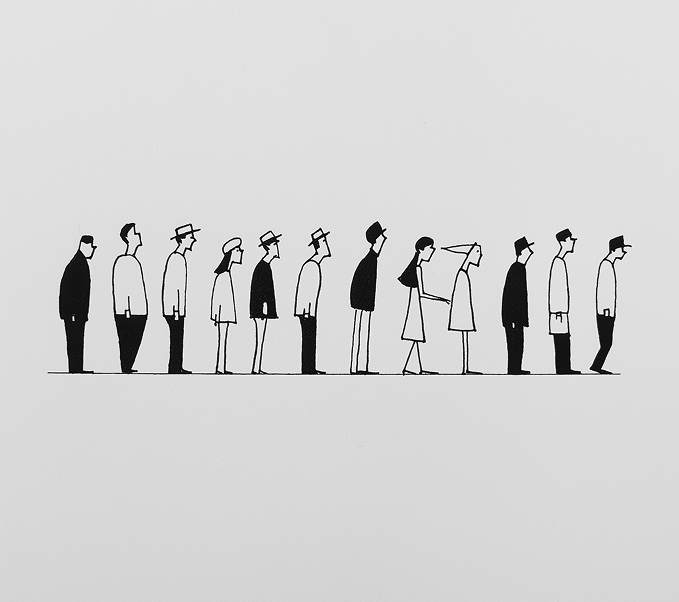
Main Photo: Israeli stamp marking the 10th anniversary of the adoption by the United Nations of the Universal Declaration of Human\ Wikipedia