Ani Ma’amin (“I Believe”)


For Natan Sharansky, the story of the Exodus was never only a story. It was a lived reality. As a prisoner in the Soviet Union, he marked the Passover Seder alone in a punishment cell, sustained by memory, faith, and the hope of freedom. Now, decades later, in a new Beit Avi Chai online conversation series with his daughter Rachel Sharansky Danziger, he returns to that story – not as history, but as inheritance – exploring how the experience of freedom is remembered, interpreted, and passed from one generation to the next.
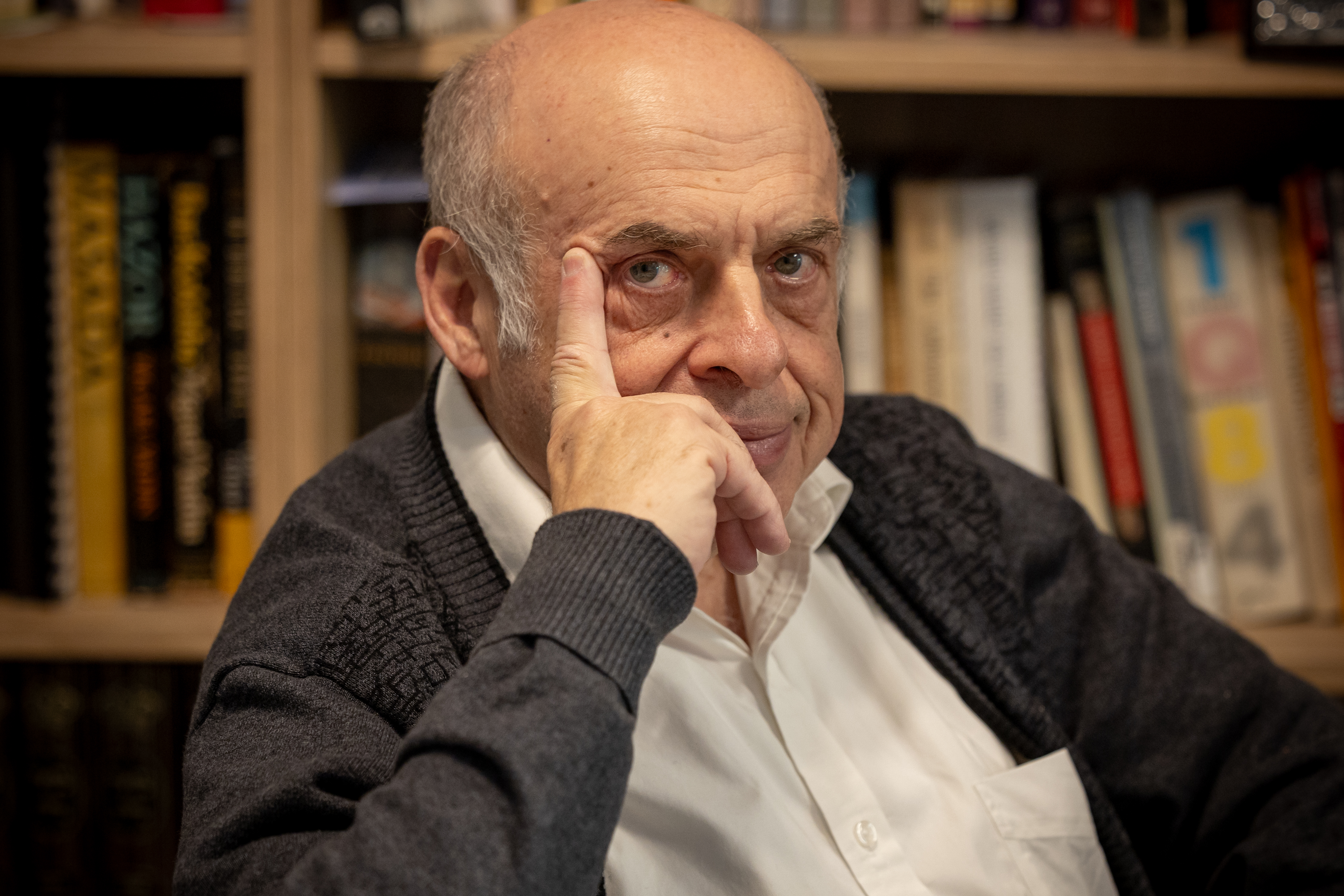
The Passover Seder is a family gathering where children ask questions and parents offer answers. But when he was imprisoned, Natan Sharansky held his Seder alone in a Soviet punishment cell. With no matzah, no wine, and no Haggadah beyond what he could remember, he used what he had at his disposal: salt for the bitter herbs and hot water for the four cups of wine. He sang Hebrew songs to himself, which made his guards think he was insane.
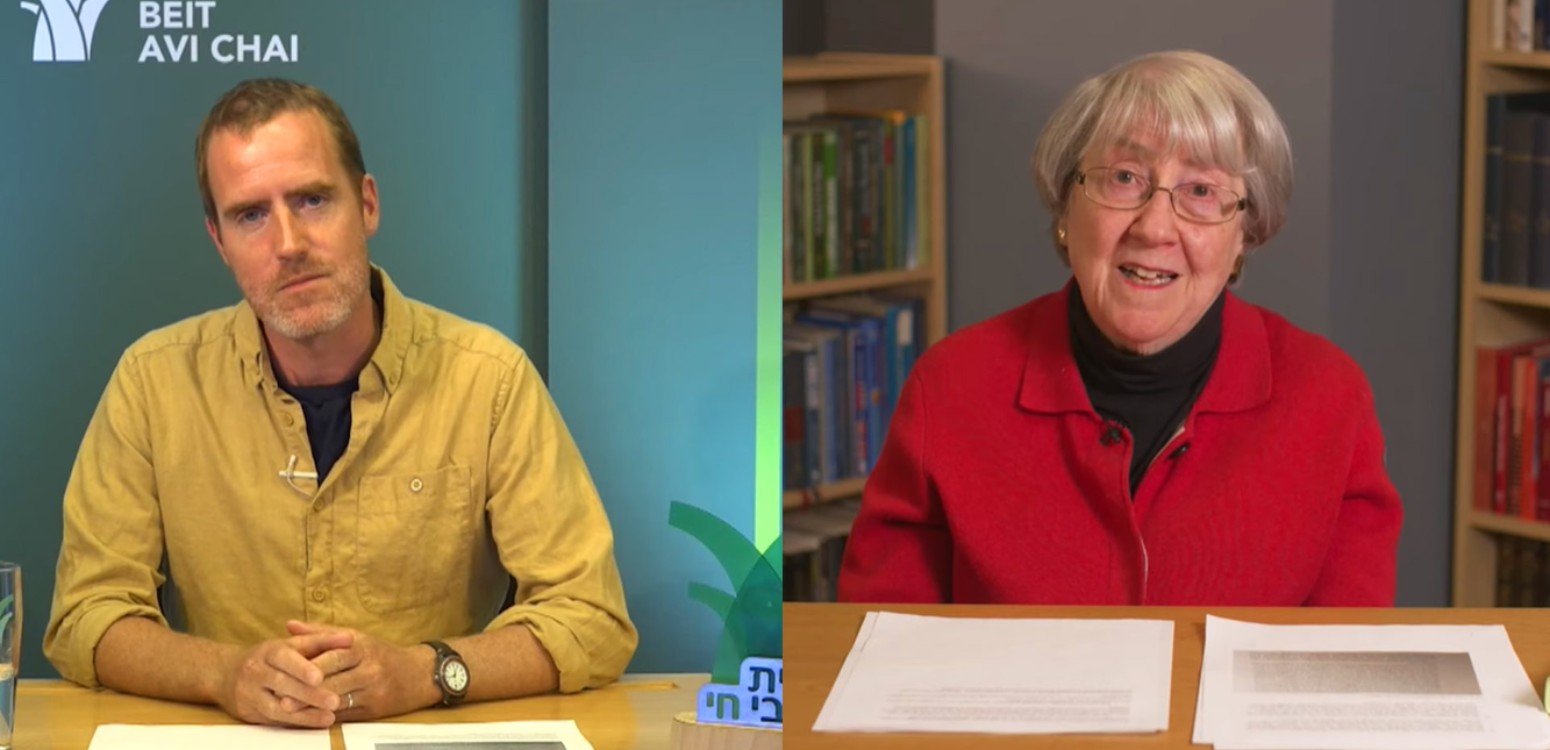
In that claustrophobic cell, he had only the hope of freedom. Now, decades after his release, he is fulfilling the Haggadah’s mandate literally. In a new series of online conversations at Beit Avi Chai titled V’higadeta L’vitcha (“And You Shall Tell Your Daughter”), Sharansky and his daughter Rachel Sharansky Danziger are exploring what happens when those who personally experienced imprisonment and exodus pass their stories to their children. The title is drawn from the biblical commandment “V’higadeta l’vincha” (“And you shall tell your son,” Exodus 13:8), which forms the foundation of the Passover Seder and the obligation to transmit the story of the Exodus from one generation to the next.
The four-part English-language series (there is a Hebrew version as well) combines the Sharansky family history with core ideas from the Haggadah.

From Refusenik to free man
Born in Ukraine in 1948, Natan Sharansky was a leading Soviet dissident who spent nine years in prison as a refusenik during the 1970s and 1980s. A mathematician and human rights activist, he became one of the most prominent figures in the Soviet Jewry movement, advocating for the right of Soviet Jews to emigrate to Israel. Following his release in 1986, he immediately moved to Israel. He entered Israeli public life and served as a government minister. He founded the Yisrael BaAliyah party together with Yuli Edelstein in 1996 and held several ministerial posts. Later, he became Chairman of the Executive of the Jewish Agency.
Today, he is the Chairman of the Institute for the Study of Global Antisemitism and Policy (ISGAP) and the Combat Antisemitism Movement (CAM). His daughter Rachel, meanwhile, was born in Jerusalem less than a year after her father was released. A writer and educator, she is currently working on a book about social cohesion and family drama in the Book of Judges and is the co-editor of a brand new Haggadah – The Az Nashir: On the Path to Redemption (The Matan Edition).
_-_P.M._Peres_Welcomes_Sharansky.jpg)
Having spent so much time in a Soviet jail before being released, Natan has experienced the Exodus story firsthand, making the challenge of transmitting lived experience to the next generation central to his own family story. The Haggadah instructs us that “in every generation, a person must see themselves as if they personally left Egypt.” But he was aware of how difficult this imaginative leap was for his daughters growing up in an independent Jewish state. “You must understand what kind of society we were fighting for [in the Soviet Union], how difficult it was to return to your identity,” Natan reflects, referring to how Jewishness was suppressed under Soviet rule, stressing the contrast to his daughters’ upbringing.
Transmission and memory
For Rachel, growing up with her father’s story was never about receiving a polished narrative. “My parents didn’t do storytelling,” she explains. “It was fragmented, in answer to my and my younger sister Hanna’s questions, which changed as we changed. It met our needs and in this way became part of who I am. It lives within me – when I face challenges, I draw something from within it.”
This approach to transmission – responsive rather than prescriptive – mirrors the Haggadah’s own structure. “I was excited to tell our family story to my own children,” Rachel says, “but the medium of questions and answers is a better way of doing it. It allows it to take root for them in a way that matches their struggles. I think sometimes our efforts to pass down history become so formal – telling the right story, even if it’s only right in your mind. You need to allow the new generation to take from it what they will. The spirit is more important than any detail.”
The first episode focuses on freedom itself – what it means and how one attains it. At first glance, the struggle of Soviet Jews for personal and national freedom seems completely different from the miraculous story of the Exodus from Egypt. But through examining key moments in the Haggadah, the conversation reveals eternal truths that can be passed from generation to generation.
When asked which element felt most present during his solitary Seder, Natan focuses on the practicalities: “You must adjust your telling of the story to those moments when you can get a cup of water, which kept you warm. There is no danger; you’re already in the punishment cell. At the same time, you’re using the limited items within reach. Imagining the leaving of Egypt was very easy.” Even in a punishment cell, Sharansky could access the freedom the Haggadah describes because his struggle for human rights and open Jewish identity mirrored the story of the escape from Egypt.
The empty chair
The second session of the father and daughter’s series addresses memory – how we connect with the generations of Jews throughout history who told the Pesach story before us. Through personal recollections and text study, the session also examines the risks of remembering suffering, exploring the tools the Haggadah provides not only to benefit from the power of memory but also to confront the dangers it contains.
This year, this issue takes on added poignancy with the news that there are finally no Israeli hostages held in captivity. During the movement for Soviet Jewry, people kept an empty chair at their Seder table in hope of the release of Sharansky and other incarcerated Jews. Sharansky’s own imprisonment became an international cause, with world leaders and activists campaigning for his release. Since October 7, Sharansky and his family did the same for the hostages. Every Shabbat they kept an empty chair with the names of every hostage until this was no longer necessary.
“What they needed to feel was that people were fighting for them non-stop,” Natan says. But he’s careful about comparisons. “I will always remember how we felt in prison and that we didn’t want to be released for any price. I refused to be released on their terms.” Referring to Gaza, he says, “We cannot separate victory over the enemy from releasing the prisoners.” Throughout his imprisonment, Sharansky famously refused several offers of early release that would have required him to confess to crimes he didn’t commit or to stop his human rights work.
For Rachel, the hostage crisis became a test of inherited memory. “For the first few months of the war I couldn’t sleep. Whenever I felt despair – that there is no way that most of them will return alive – I thought about the people who fought for my parents over and over again. If they had given in to despair, I would not be alive today. The fact that I’m here means that I don’t have the privilege to say there’s no hope.”
Yet she’s honest about the limits of historical precedent. “Not everybody returned alive, and sometimes I feel that it’s unjust. The struggle for Soviet Jewry was victorious but here it was only partially successful. Obviously, circumstances were different, but the pain will remain with us.”
Four children, one table
The third conversation addresses community and the Haggadah’s Four Children – wise, wicked, simple, and the one who does not know how to ask. This conversation explores the individual’s place within the community and uses the Haggadah’s Four Children model to transform our differences into a source of strength.
“I find the four children framework very empowering and comforting,” Rachel says, “because it shows that our ancestors recognized we are different people who make different choices. They didn’t try to standardize the story for us. All four children have a place at the table – even the so-called evil son.”
Perhaps surprisingly, this resonates with the Soviet Jewry movement’s own experience of diversity. “From today’s standpoint it might have looked like one unified movement,” Natan says, “but there were actually lots of different groups with very different agendas. Crucially, though, they shared the aim of breaking down the Iron Curtain and becoming free. With this one aim, the divisions weren’t a reason for permanent strife but an advantage.” During his years in the Soviet Union, Sharansky worked to unite disparate groups of refuseniks and dissidents, including those focused specifically on Jewish emigration and those advocating for broader human rights. Rachel finds this particularly instructive. “Realizing just how fractured the movement was back then was deeply comforting for me. If it was idealized unity, then it is unattainable to us; but they achieved great things because of the single aim. This is an important lesson for us today.”
A symbol of freedom struggles worldwide
The final episode examines the Exodus story’s influence around the world. This conversation, which explores various sections of the Haggadah, examines the model of freedom that the Exodus story offers. Slave owners in the Caribbean understood its power, erasing it from Bibles distributed to enslaved people. Martin Luther King Jr. and Benjamin Franklin found in it a language of hope and freedom, while Sharansky himself became a symbol of freedom struggles worldwide.
This relationship between the particular and the universal is central to Sharansky’s understanding of the Haggadah and the impact its story had on his life. “I was involved in two movements – the Zionist and the human rights movement in the Soviet Union. I always felt that you can fight for the universal only because you have a lot of strength in your identity and the connection with your history and people. That is our message.” Rachel adds: “We think there’s a contradiction but at its heart, striving for justice and freedom and being rooted in your identity don’t have to contradict each other.”
The Haggadah invites each generation to rediscover and reinterpret its central ideas. This is one of the key aims of the series – to inspire attendees to rethink the Haggadah in light of Sharansky’s unique experiences and the way he has told his story to his daughters. From Rachel’s perspective, though, what does she bring to her father’s story that he might not otherwise have seen?
“Both Rachel and Hanna have the knowledge of sacred texts much deeper than mine,” Natan acknowledges. “I just had the Haggadah. That’s what makes the conversation at the Seder table so interesting.” Rachel sees the intergenerational dynamic as essential to the Haggadah’s method. “It goes back to how we tell the story. The way my parents and the Haggadah bequeathed us the narrative puts the onus of telling the story on the youngest generation. We must see where the answers meet us. My parents are bringing their experiences and we are bringing ours.”
That willingness to let each generation find its own meaning while staying rooted in the story is perhaps the most important lesson of V’higadeta L’vitcha. Whether in a Soviet punishment cell or around a family table in Jerusalem, the Haggadah continues to speak – not as a fixed historical narrative, but as a vital and continually developing conversation about freedom.
For more, see Beit Avi Chais online series “And You Shall Tell Your Daughter” (in English).
Main Photo: Natan Sharansky and his daughter Rachel Sharansky Danziger\ Nikolay Busygin