Ani Ma’amin (“I Believe”)


When Isaac Bashevis Singer (1902-1991) won the Nobel Prize in Literature in 1978, he went up to the podium to deliver his Nobel Prize lecture. In this lecture, he proclaimed Yiddish to be “a language of exile, without a land, without frontiers, not supported by any government” and added that it is “a language that was despised by both gentiles and emancipated Jews.”
Isaac Bashevis Singer might be the best-known example of what happened to Yiddish when it moved from the “Old World” of Europe to the “New World” of America.
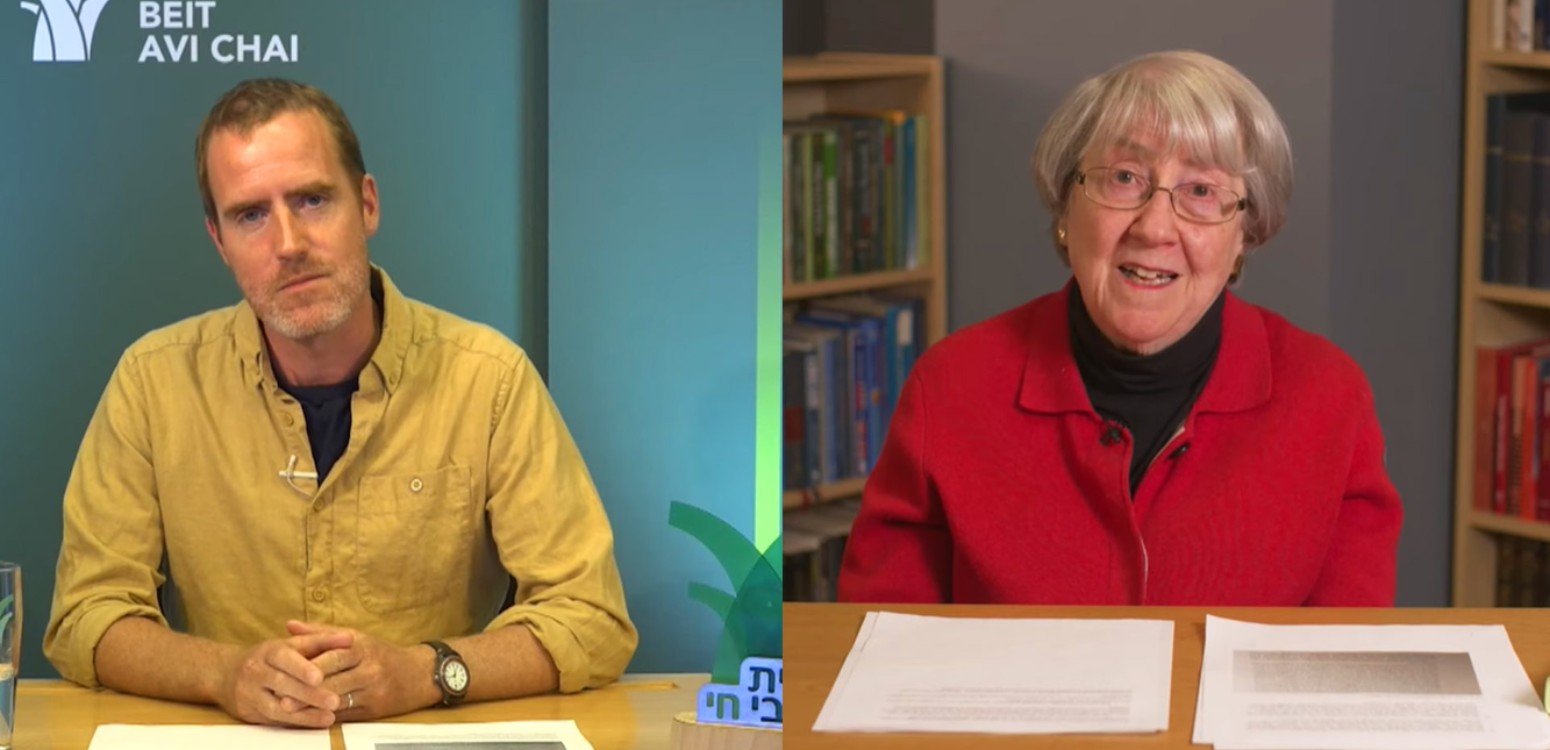
Dr. Yael Levi, senior lecturer and head of the Program of Yiddish Language, Literature, and Culture at the Hebrew University of Jerusalem, takes a deep dive into this movement in her aptly named series “Yiddish in Transit.”
Movement in space and time
What is this transit, this movement in space and time? Through Levi’s lens, we can examine how Yiddish speakers created meaning while crossing oceans, borders, and generations, and how the language itself transformed in the process. Transform how? Through the newspaper culture of the late XIX century and early XX century that connected the immigrants to America and the communities left behind in Eastern Europe, as well as through the Yiddish avant-garde literature and culture, the creators of which could not have innovated as they did had they not made the move from Europe to America.
Levi views the organizing principle as transit – both literal movement (immigration, trains, ships) and metaphorical transformation (linguistic change, cultural adaptation, generational shifts).
An ongoing negotiation
Yiddish moved around the world with its speakers. And so, in the late XIX century and early XX century, when a critical mass of Yiddish speakers moved to America, the language changed.
“The American Yiddish press serves as a perfect example of how Yiddish writing shaped Jewish American identity,” says Levi. “Newspapers were far more than news sources – they connected immigrants to multiple worlds simultaneously: to each other, to the old country, and crucially, to a new vision of who they could become in America. This three-way connection is fundamental to understanding Jewish American identity as something neither purely Old World nor purely American, but rather an ongoing negotiation. The emergence of Yiddish press shows how Yiddish became the language through which immigrants could imagine and construct their new American selves while maintaining a connection to their heritage.”
The mass immigration of Jews from Eastern Europe shifted the American Jewish demographics of the time, making New York City the Jewish center of North America. The three-way connection mentioned above – of Jewish immigrants connecting to each other, to their relatives in the European old country, and to the vision of a new Jewish American – shows that Yiddish speakers didn’t passively experience upheaval. “The language was transforming, adapting, innovating,” Levi explains. “Whether through the press, modernist literature, or lullabies passed from mother to child, Yiddish was a dynamic language through which people negotiated the most profound transitions of modern Jewish history.”
A small example of this can be found in older publications of the time, where there are transliterations of words from English into Yiddish. For example, “inches” is written as it sounds with Hebrew letters (אינטשעס). Words were adopted from English in Yiddish: “factory” became fektri, sometimes taking over from fabrik, and “business” became bizniz, sometimes taking over from gesheft.
Yiddish vs. Hebrew
It is no coincidence that the transit of Yiddish to America coincides with the development of Modern Hebrew in Eretz Yisrael (later to become the State of Israel). What can be said, if anything, of the way Israelis think of Yiddish, if they think about Yiddish at all? Levi brings up the myth of Yiddish as a dying language and Modern Hebrew being its replacement.
“I think most Israelis are just not aware of the complex history of the Yiddish language. To the extent that this myth persists, I believe it serves ideological needs – from Enlightenment to Zionism, which needed to position Hebrew as the language of innovation and futurity, and Yiddish as the language of the past. Additionally, because Yiddish modernism was cut short and overshadowed by historical upheavals, its innovative period has been less accessible and less studied,” says Levi.
Yiddish modernism was exemplified in authors and poets like Bashevis Singer, as well as Itzik Manger (1901-1969), Devorah Fogel (1900-1942) and Der Nister (1884-1950), all of whom brought different aspects of literature, culture and innovation into Yiddish, in ways that rivaled their English, German, and French counterparts at the time.
%20(1).jpg)
Despite the narrative that many Israelis grew up with – that Hebrew replaced Yiddish as part of a national revival – Levi notes that “understanding that Yiddish underwent its own profound transformations offers a more nuanced view of Jewish linguistic history. It challenges the simplistic old/new binary and shows that linguistic change involves profound cultural negotiation.”
For more, see Dr. Yael Levi’s online series at Beit Avi Chai, “Yiddish in Transit” (in English).
Main Photo: Eastern European Jewish immigrants arriving in New York\ Wikikpedia